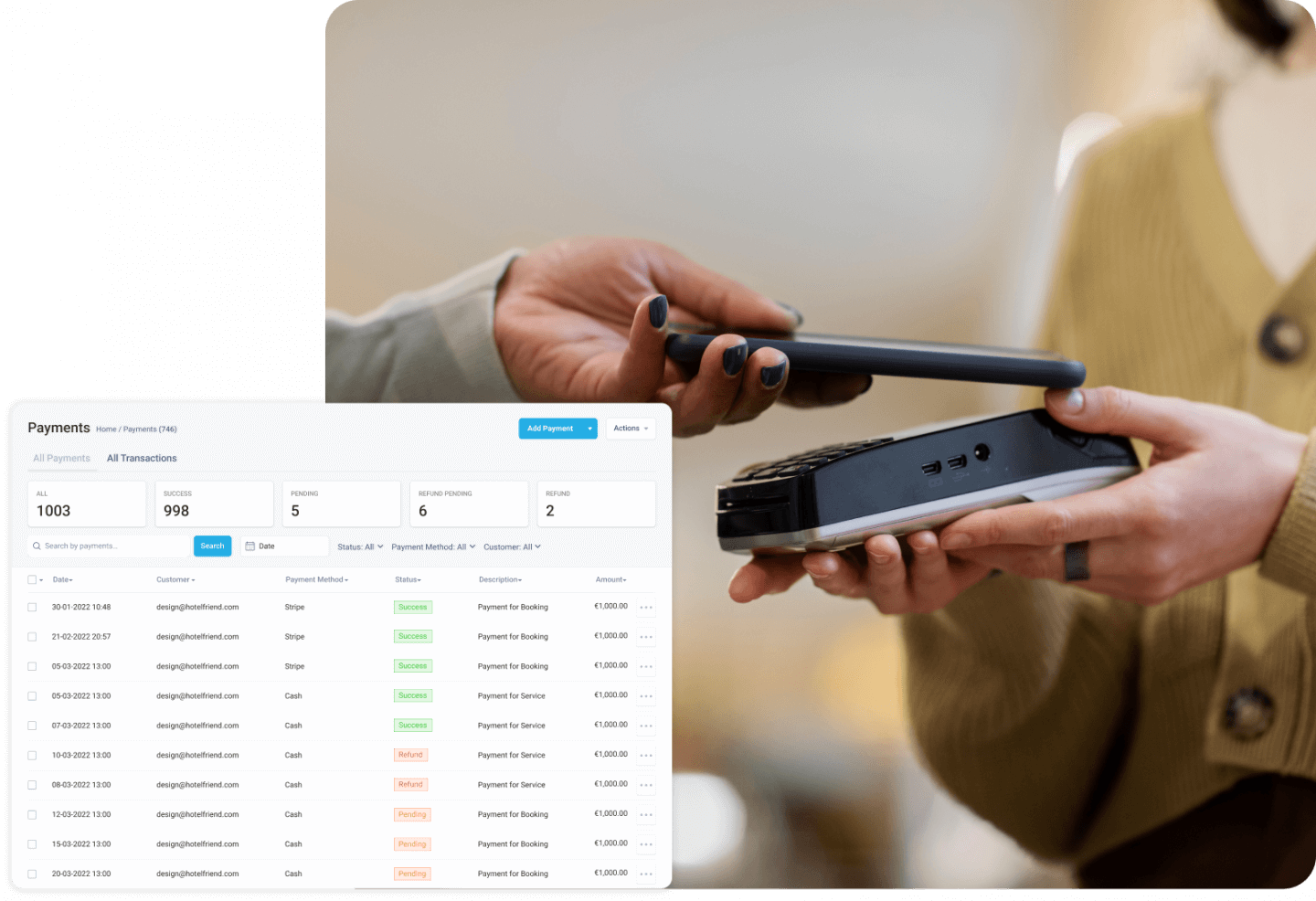
Give Your Hotel More Payment Flexibility
HotelFriend F.A.Q.
Why should hotels offer flexible methods of payment in hotel?
Flexible payment options make check-in and check-out faster, improve guest convenience, and help hotels accept transactions across direct bookings, OTAs, apps, kiosks, and the front desk.
What should I look for in a hotel payment system?
How does hotel payment processing system differ from standard payment processing?
Hotel payment flows differ from traditional retail payment flows in that they must account for pre-authorizations, delayed charges, no-shows, and refunds across multiple sales channels. It also needs to integrate with property management systems and booking platforms so that every transaction is properly tracked and reconciled.
What are the main methods of payment in hotel environments today?
Modern hotels accept credit and debit cards, digital wallets like Apple Pay and Google Pay, virtual cards from OTAs, bank transfers, and pay-by-link requests. Some properties also support QR code payments and POS terminals to cover every stage of the guest journey.
How does a payment gateway for hotels work?
A payment gateway is the system that encrypts and transmits card information between the guest, the hotel, and the acquiring bank to authorize transactions. It is a secure link that instantly verifies payment details, routes funds to the correct destination, and protects confidential information throughout the process.
How to pay for hotel online?
Guests can usually pay online with a credit card, debit card, digital wallet, bank transfer, or pay-by-link, depending on the hotel’s booking system and payment policy.
What makes HotelFriend different when it comes to hotel credit card processing?
HotelFriend provides end-to-end card processing across the Booking Engine, OTAs, Mobile Concierge App, and POS on a single connected platform. Raw data is never stored as card details are tokenized. Every transaction is backed by real-time monitoring and a dedicated support team.
What is automated hotel payment processing, and why does it matter?
Automated processing removes manual steps in the collection, verification, and reconciliation of payments. It reduces human error, accelerates financial reporting, and gives your team time to focus on guest service rather than running around looking for transactions or re-entering data across multiple systems.
How do hotel payment platforms manage payments in multiple currencies?
Advanced systems convert and settle payments in the guest's preferred currency while reporting in your hotel's base currency. This removes the burden of manual conversion, simplifies reconciliation, and makes it easier to serve international guests without extra administrative work.
How to pay for hotel at the property?
At the property, guests can typically pay at check-in or check-out using a card, cash, mobile wallet, or another payment method accepted by the hotel.
What are the best practices for hotel payment processing?
They include using secure payment gateways, supporting multiple payment methods, automating reconciliation, protecting guest card data, and maintaining consistent payment flows across direct bookings, OTAs, mobile apps, kiosks, and the front desk.
What is the role of tokenization in a hotel payment processing system?
Tokenization replaces sensitive card data with a unique identifier that cannot be used outside the payment system. This means even if data is intercepted, it cannot be used for fraud, reducing your liability and helping you maintain compliance with security standards.
How do hotel payment automation tools reduce no-show revenue loss?
Automation tools can send payment requests before arrival, pre-authorize cards at the time of booking, and charge no-show fees without manual intervention. This proactively protects revenue and reduces the administrative effort required to chase failed or missed payments.
How can hotels keep up with payments hospitality news?
Hotels can keep abreast of industry news surrounding payment security, digital wallets, OTA transactions, chargebacks, and guest checkout trends. This helps them choose better payment tools, reduce manual work and deliver smoother, safer payment experiences across booking channels, apps, kiosks and front-desk operations.
What are the most common methods of payment in hotel?
Guests usually pay by credit card, debit card, digital wallet, bank transfer, OTA payment, cash, pay-by-link, or mobile app payment.
How does HotelFriend support payments hospitality news, and industry compliance updates?
HotelFriend monitors regulatory and industry developments to ensure its platform stays aligned with evolving compliance standards. The team provides guidance and updates so your property always operates in line with current requirements, without requiring you to track every change individually.
When do you pay for a hotel, and how does the timing affect hotel payment management?
Payment timing depends on the booking type: some reservations require payment upfront, others on arrival, and some allow payment at checkout. Your processing platform needs to handle all three scenarios smoothly, including pre-authorizations, partial charges, and final settlement at different points in the guest stay.
What are the best practices for hotel payment processing systems to reduce chargebacks?
Clear cancellation policies, card verification at booking, pre-authorization before arrival, and fast transaction processing reduce chargebacks. Training front desk staff to handle disputes and maintain accurate transaction logs will go a long way toward putting you in a strong position when a chargeback is raised.
How should a hotel paymentsystem handle OTA bookings and virtual cards?
OTA bookings typically arrive with virtual card details that need to be matched to the correct reservation and charged at the right time. A well-integrated system automates this matching process, reduces errors, and ensures the correct amount is collected without manual reconciliation of each OTA transaction.
What security standards should a property payment system meet?
PCI DSS compliance is the baseline requirement for any hotel processing card payments. Beyond that, look for end-to-end encryption, tokenization, fraud-detection tools, and two-factor authentication to ensure that both guest data and hotel revenue are protected at every transaction.
How does HotelFriend handle hotel payment card processing for direct bookings?
HotelFriend connects directly with your Booking Engine to capture and verify card details at the point of reservation. Guests can pay instantly at checkout, and the system automatically stores tokenized card data for any follow-up charges, refunds, or no-show fees, eliminating the need for manual re-entry.
Why do best practices for hotel payment processing matter?
They help hotels reduce payment errors, prevent fraud, speed up check-in and check-out, and give guests a smoother experience. Clear payment rules also make it easier for staff to track deposits, refunds, chargebacks, and multi-channel transactions.
What role does PCI DSS play in hotel payment platforms?
PCI DSS sets the security standards that every business processing card payments must follow to protect cardholder data. For hotels, compliance means implementing encryption, access controls, network monitoring, and regular audits to avoid penalties, data breaches, and damage to guest trust.
How does hotel payment automation improve the guest checkout experience?
When payment steps are automated, guests spend less time at the front desk and more time enjoying their stay. Pre-arrival payment requests, instant digital receipts, and one-click checkout options reduce friction and create a smoother, more modern experience that reflects well on your property.
What should hotels know about hotel payment processing tools for group bookings?
Group reservations often involve split payments, master billing accounts and multiple invoices that need to be tracked against a single reservation. Automation handles these cases by consolidating all charges into one record, simplifying reconciliation and reducing the likelihood of billing disputes.
How does a payment gateway for hotels integrate with a property management system?
Typically, this is done via an API connection that synchronizes reservation data, payment status, and guest profiles in real time between the gateway and the PMS. This means no manual data entry, fewer reconciliation errors, and a single view of every transaction for your team.
How does HotelFriend support hotel payment operations across mobile and self-service channels?
HotelFriend extends payment acceptance to the Mobile Concierge App, self-service kiosks, and QR code payments in restaurants and common areas. Every transaction is routed through the same secure platform, so your team has full visibility and control regardless of where or how the guest chooses to pay.
How do hotels' checkout payments handle refunds and cancellations?
Refunds are initiated directly from the payment dashboard and processed back to the original payment method. The system automatically records the transaction, updates the booking record, and sends a confirmation to the guest, reducing the administrative time required to manage cancellations and ensuring accurate financial reporting.
When do you pay for a hotel after booking online?
In most cases, guests pay either at the time of booking or at check-in. Some hotels also allow payment at check-out, depending on the rate type, cancellation policy, and booking channel used.
What fees are typically associated with hotel payment card processing?
Typical fees include interchange fees (paid to card networks), processing fees (paid to the payment provider), and any monthly platform or gateway fees. Knowing your transaction volume and card mix allows you to assess your aggregate costs and negotiate better rates where you can.
How can a property payment system simplify end-of-day reconciliation?
A centralized dashboard that consolidates transactions from all channels into a single view makes reconciliation significantly faster. Automated matching of payments to bookings, instant settlement reports, and exportable data reduce the time your accounting team spends closing out each day's financial records.
What is pay-by-link, and how does it fit into hotel payment platforms?
Pay-by-link lets your team send a secure payment URL to a guest via email or message, allowing them to settle outstanding charges remotely without calling or visiting the front desk. It is especially useful for collecting deposits, no-show fees, or balances from guests who have already checked out.
When do you pay for a hotel if you book through an OTA?
When booking through an OTA, payment depends on the platform and hotel policy. Guests may be charged immediately, before arrival, at check-in, or after their stay if the reservation allows flexible payment.
How does HotelFriend help hotels understand how to pay for hotel in payments through flexible options?
HotelFriend can manage a range of payment options, including prepayment in full at booking, split payments, and pay-on-arrival. The platform allows simple configuration of payment rules by room type, rate plan, or booking channel, so each guest has a payment experience that meets the conditions of their reservation.
How does hotel payment automation reduce manual errors in financial reporting?
Automation removes the need to manually transfer data between systems, match invoices, or calculate totals by hand. Every transaction is recorded and categorized automatically, so your reports are always up to date, and the risk of human-error discrepancies is significantly reduced.
What happens when a payment gateway for hotels transaction fails?
A failed transaction triggers an automated notification to the guest and an alert to your team so the issue can be resolved quickly. Depending on your setup, the system can automatically retry the payment, send a new payment request, or flag the reservation for manual follow-up before arrival.
How do hotel billing management systems support multiple properties or hotel groups?
Multi-property systems enable a central finance team to oversee transactions, run reports, and manage settings for all locations from a single login. This allows hotel groups to enjoy consistent financial control, easier management of compliance and property performance benchmarking, without the need to change between different platforms.
What reporting features should a hotel billing processing system include?
The reporting features are useful and include transaction logs, daily settlement summaries, refund tracking, chargeback reports and channel revenue breakdowns. Easily share financial info with your accounting team or ownership group by filtering and exporting the data in different formats.
How does HotelFriend approach payments hospitality news, and industry best practices?
HotelFriend provides ongoing support in English and German, keeping clients informed about changes in payment regulations, new fraud trends, and evolving guest expectations. This ensures your property stays ahead of compliance requirements and can adapt its payment strategy as the hospitality industry continues to develop.
Can a hotel payment system connect with multiple booking channels at the same time?
Yes, a well-built platform integrates with your direct booking engine, OTAs, and channel manager simultaneously. All transactions flow into a single dashboard, so your team never has to log in to separate systems to track payments from different sources.
How does hotel payment card processing work during peak season when transaction volumes spike?
A robust processing platform scales automatically to handle higher volumes without slowing down or creating bottlenecks at checkout. Cloud-based infrastructure ensures that, whether you process 10 or 10,000 transactions in a day, each one is handled with the same speed and security.
What is the difference between a hotel payment tool and a general e-commerce payment solution?
A hospitality-specific platform created for the unique requirements of hotel operations, including pre-authorizations, delayed settlement, OTA virtual cards, and multi-channel reconciliation. Generic e-commerce solutions are designed for single, immediate purchases and lack the flexibility to handle the complex reservation payment flows.
How does hotel payment workflow support upselling and ancillary revenue collection?
Integrated payment across all touchpoints makes it convenient for guests to add room upgrades, spa bookings, restaurant charges, and late check-out fees to their bill. Automated charge capture frees your team from processing individual add-ons, allowing them to focus on creating opportunities to increase revenue per stay.
How does HotelFriend ensure that its hotel payment system stays current with evolving card network rules?
HotelFriend actively monitors updates from Visa, Mastercard, and other card networks to ensure its platform remains compliant with the latest rules on authorization, settlement, and dispute handling. Clients benefit from these updates automatically without needing to manage technical changes on their side.
How does hotel credit card processing handle pre-authorization holds and final settlement?
A pre-authorization temporarily reserves funds on the guest's card at the time of booking or check-in without capturing the full amount. At checkout, the system releases the hold and settles the actual charge, ensuring the correct amount is collected while protecting your property against no-shows and unexpected incidentals.
What should small independent hotels look for in a hotel payment system?
Small properties need a solution that is affordable, easy to set up, and does not require a dedicated IT team to manage. Look for a platform with clear pricing, straightforward onboarding, responsive support, and the ability to accept the payment methods your guests actually use.
How does hotel transaction management interact with loyalty programs and reward point redemptions?
Integrated processing platforms can identify loyalty identifiers at checkout and apply reward redemptions or points balances as part of the payment flow. This means a seamless experience for returning guests and less manual effort required to reconcile loyalty transactions separately from standard payments.
What is 3D Secure and why does it matter for hotel payment platforms?
3D Secure is an additional layer of authentication that verifies the cardholder’s identity before a transaction is authorized, reducing the risk of fraudulent bookings. Adding 3D Secure to direct booking pages allows hotels to transfer liability for fraudulent transactions to the card issuer.
How does HotelFriend approach hotel credit card processing for properties with a restaurant or spa?
HotelFriend unifies payment acceptance across all hotel outlets, so a guest's restaurant bill, spa treatment, and room charges can all be settled through the same platform at checkout. This removes the need for separate payment terminals or reconciliation processes for each department.
How does a modern hotel payment system improve the pre-arrival guest experience?
Sending a payment request or pre-authorization link before arrival gives guests the convenience of settling payment on their own schedule. This also reduces time spent at the front desk during check-in, creating a smoother arrival experience and setting a positive tone for the rest of the stay.
What is the impact of hotel billing automation on staff workload and operational efficiency?
Automation reduces the manual work your team has to do daily, such as chasing down unpaid reservations or reconciling transactions across systems. This allows staff to concentrate on more valuable activities such as guest interactions, upselling and resolving service issues quickly.
How does hotel payment workflow handle accessibility for international guests who use unfamiliar payment methods?
A platform that supports multiple currencies, international card schemes, and digital wallets removes barriers for guests arriving from different countries. Offering familiar payment options at every touchpoint increases booking conversion and reduces the friction that can cause guests to abandon the reservation process.
What should hotels consider when evaluating the security of a hospitality payment gateway?
Beyond PCI DSS certification, check whether the gateway offers end-to-end encryption, tokenization, fraud-scoring tools, and detailed transaction logs for auditing. All of these layers provide you with the best possible protection for your property through a single gateway.
How does HotelFriend handle guest payment processing for extended stays and long-term reservations?
HotelFriend supports scheduled payment plans for long-stay guests, allowing charges to be split across multiple dates rather than collected in a single transaction. This flexibility improves cash flow visibility and makes it easier for guests to manage larger accommodation costs over time.
How does hotel paymentsystem technology support contactless and mobile-first guest journeys?
Modern hospitality payment platforms are built to support NFC payments, QR codes, and in-app transactions, allowing guests to pay without physical contact or a visit to the front desk. This aligns with growing guest expectations for self-service options and reduces queuing at busy checkout periods.
What is the relationship between a hospitality payment platform and revenue management?
Payment data feeds directly into your reporting tools, giving revenue managers a more complete picture of booking trends, cancellation rates, and ancillary spend. That insight can inform your pricing decisions, promotional strategies, and channel mix decisions, all of which directly impact your bottom line.
How does hotel credit card processing protect against friendly fraud and disputed transactions?
Friendly fraud occurs when a guest disputes a valid charge, usually after checking out. Powerful processing platforms hold rich transaction data, authorization logs and digital signatures that provide hotels with the proof they need to win disputes with the card issuer.
What is dynamic currency conversion, and how does it relate to guest payment processing?
Dynamic currency conversion enables international guests to see and pay in their home currency at the point of transaction. It’s easy for guests, but hotels should be aware of the processing fees associated with it and ensure the feature is communicated clearly so guests can make an informed decision at checkout.
How does HotelFriend support properties transitioning from an outdated hotel payment system to a modern platform?
HotelFriend provides guided onboarding, data migration support, and step-by-step assistance in English or German to make the transition as smooth as possible. The team works alongside your staff to configure the platform, test integrations, and ensure everything is running correctly before going live.
How does automated hotel payment processing reduce the risk of double charges or billing errors?
Automation creates a single source of truth for every transaction, so charges are applied once and matched automatically to the correct reservation. This eliminates duplicate entries and the need for manual corrections.
What are the key differences between hotel payment platforms designed for boutique hotels versus large chains?
Boutique hotels require simple, low-cost solutions with easy setup and strong support, while large chains need enterprise-level platforms with multi-property management, advanced reporting and deep PMS integration. The best systems have scalable configurations that grow with your property, so you don't have to change platforms as your business grows.
How does a hospitality payment platform handle split payments between multiple guests?
Split payment functionality allows users to split the charges across two or more cards or payment methods at the checkout. This can be valuable when booking for a group or when sharing accommodation. A modern platform handles this automatically, records each portion separately, and maintains clean reconciliation without requiring manual adjustments from your front desk team.
What ongoing maintenance does a hotel payment system require to stay secure and fully operational?
Regular software updates, periodic security audits, and staff training are the key maintenance requirements for any payment platform. All of this is managed automatically by a trusted provider who pushes compliance updates and security patches without disrupting your day-to-day operations. Let your team focus on running the property, not the technology that powers it.