
Editorial note: This guide replaces a HotelFriend article published in 2018. The earlier page included trend predictions and broad claims about consumer behavior that are no longer suitable as current guidance.
Effective hotel marketing connects three jobs. It helps suitable travelers discover a property, gives them enough confidence to book, and creates a responsible way to stay in touch after a visit. A campaign can attract many clicks and still fail if rates are unclear, rooms appear unavailable, or the booking path is difficult to use.
There is no universal channel mix. A city business hotel, a rural spa property, and a seasonal resort serve different trips and booking windows. Each hotel needs goals, guest segments, distribution choices, content, and measurement that fit its own demand. This guide offers a framework for making those choices without relying on short-lived trends or invented benchmarks.
Define the commercial goal first
Begin with the business problem, not a platform. “Post more on social media” is an activity. It does not say what the hotel needs to change. A useful goal names an audience, an action, a period, and a measurement method.
A property might seek more qualified visits to selected room pages during a need period. It might improve completion of its direct booking path or encourage previous guests to consider a relevant return offer. Another hotel may need wider awareness in a new source market. These goals require different messages and channels.
Define the guardrails as well. Record available inventory, rate rules, campaign cost, staff capacity, and the dates when an offer should stop. Agree on who owns rates, landing pages, creative approval, and reporting. This prevents a marketing campaign from promising an experience that operations cannot deliver.
Understand guests without collecting everything

The old advice to build a large database by collecting as much information as possible should not be followed. In the EU, the GDPR requires personal data to be processed lawfully and transparently for specific purposes. It also requires data minimisation, which means collecting only what is necessary for those purposes. Retention and security also need attention.
Hotels can still use first-party information. Booking source, stay dates, chosen room, language, and a guest’s stated preferences may help with service or relevant communication. The hotel should first identify why each field is needed, its lawful basis, who may access it, how long it is kept, and how the guest is informed. Marketing consent should not be assumed merely because someone completed a stay.
Useful segments can remain simple. Examples include previous leisure guests who chose family rooms, corporate bookers with an active agreement, or newsletter subscribers interested in spa offers. The segment should relate to the campaign purpose. Sensitive inferences and unnecessary personal detail create risk without making a message useful.
This is general marketing guidance, not legal advice. Hotels should have their privacy notices, consent flows, tracking, processors, retention rules, and cross-border data arrangements reviewed for their actual operations.
Make the hotel website support a decision
A hotel website must answer practical questions before it asks for a booking. Show the location, room differences, included services, important policies, accessibility information, and accurate photographs. Explain taxes and charges at the right stage. Keep contact details easy to find. Translate pages that serve real source markets and maintain those translations when details change.
Map the path from a landing page to confirmation. Check it on common phone and desktop sizes. A traveler should be able to choose dates, understand the available room and rate, review conditions, and complete the reservation without losing context. Test unavailable dates, validation errors, payment failure, and return visits as well as the ideal route.
Campaign continuity matters. If an ad promotes a weekend package, its landing page should show the same package and relevant dates. If a rate is no longer available, the page should not leave the visitor at a dead end. Marketing, revenue, and front-office teams need one process for checking live offers.
Build search and local visibility around real guest needs
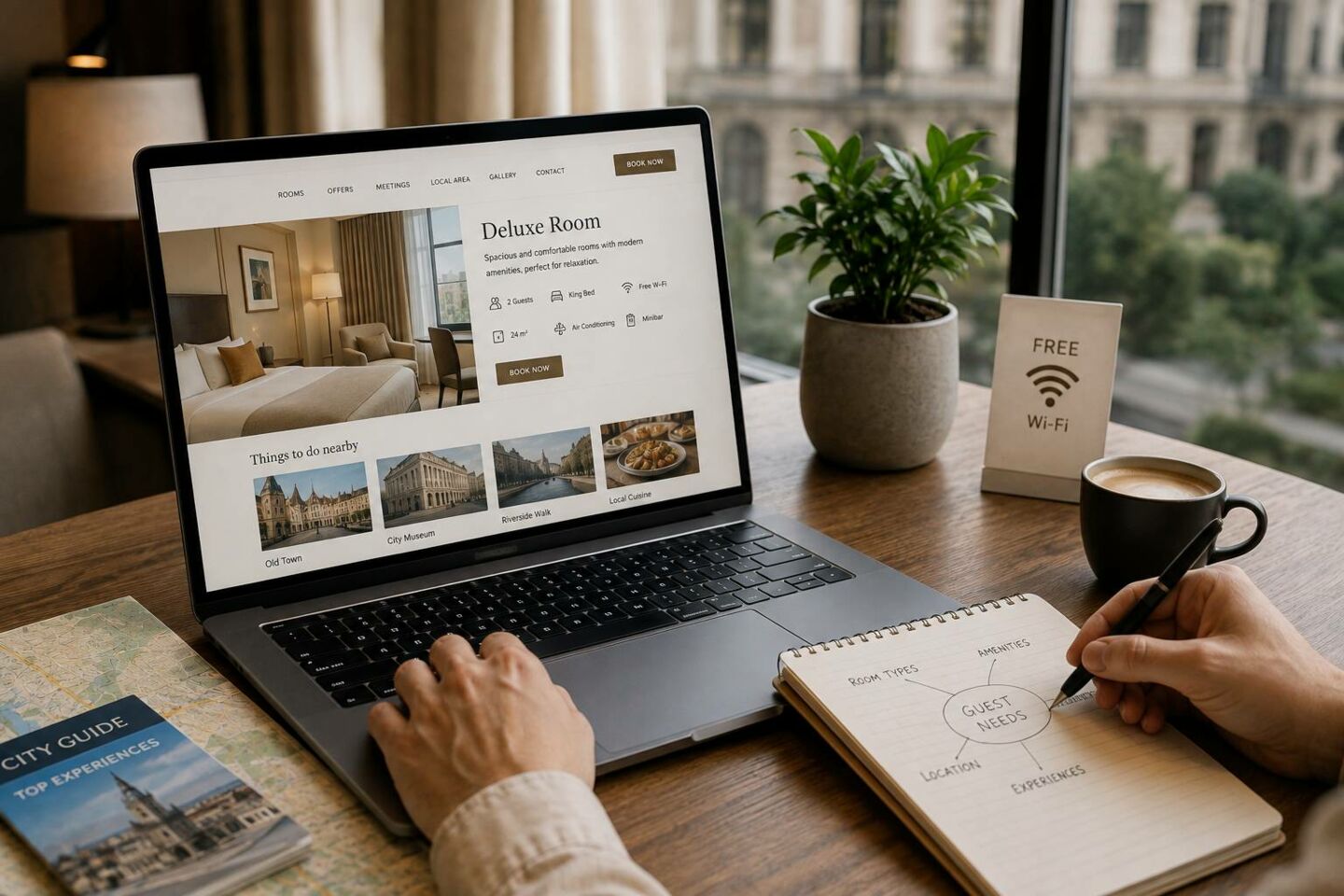
Search content should help a traveler make a choice. Google recommends people-first material that provides original value and clear expertise instead of pages created mainly to manipulate rankings. For a hotel, useful pages may explain room types, meeting capacity, accessible facilities, transport options, seasonal operations, or nearby experiences that staff genuinely know.
Use descriptive page titles, clear headings, internal links, and text that matches the page. Avoid creating many near-duplicate destination pages with only place names changed. Keep key facts consistent across the website and other profiles.
A verified Google Business Profile gives a hotel a way to manage information and interact with prospective guests. Review the property name, address, contact details, category, amenities, and images. A Google Hotels integration can also display hotel rates, availability, and direct booking links. Ownership should sit with the hotel, while staff and agencies receive suitable access instead of sharing one password.
Balance direct channels, OTAs, and hotel search
Direct and third-party distribution serve different purposes. Online travel agencies can expose a property to travelers who do not know its brand. A direct website gives the hotel control over its own presentation and booking path. The goal is not automatically to remove one channel. It is to understand each channel’s reach, cost, cancellation pattern, payment model, data access, and value for the property.
Google’s free booking links can show eligible hotel rates and send travelers to a supplied landing page. Google says these links are separate from paid hotel ads. Their ranking can consider utility signals, including landing-page experience and historical price accuracy. Hotels may connect through a booking or technology provider, so responsibilities and fees should be confirmed.
Rate accuracy is a marketing concern as well as a distribution task. A price shown in search should match the landing page for the selected itinerary. Review taxes, fees, currency, cancellation rules, room naming, and availability. A cheaper click has little value if the traveler reaches an inconsistent offer.
Use paid campaigns selectively
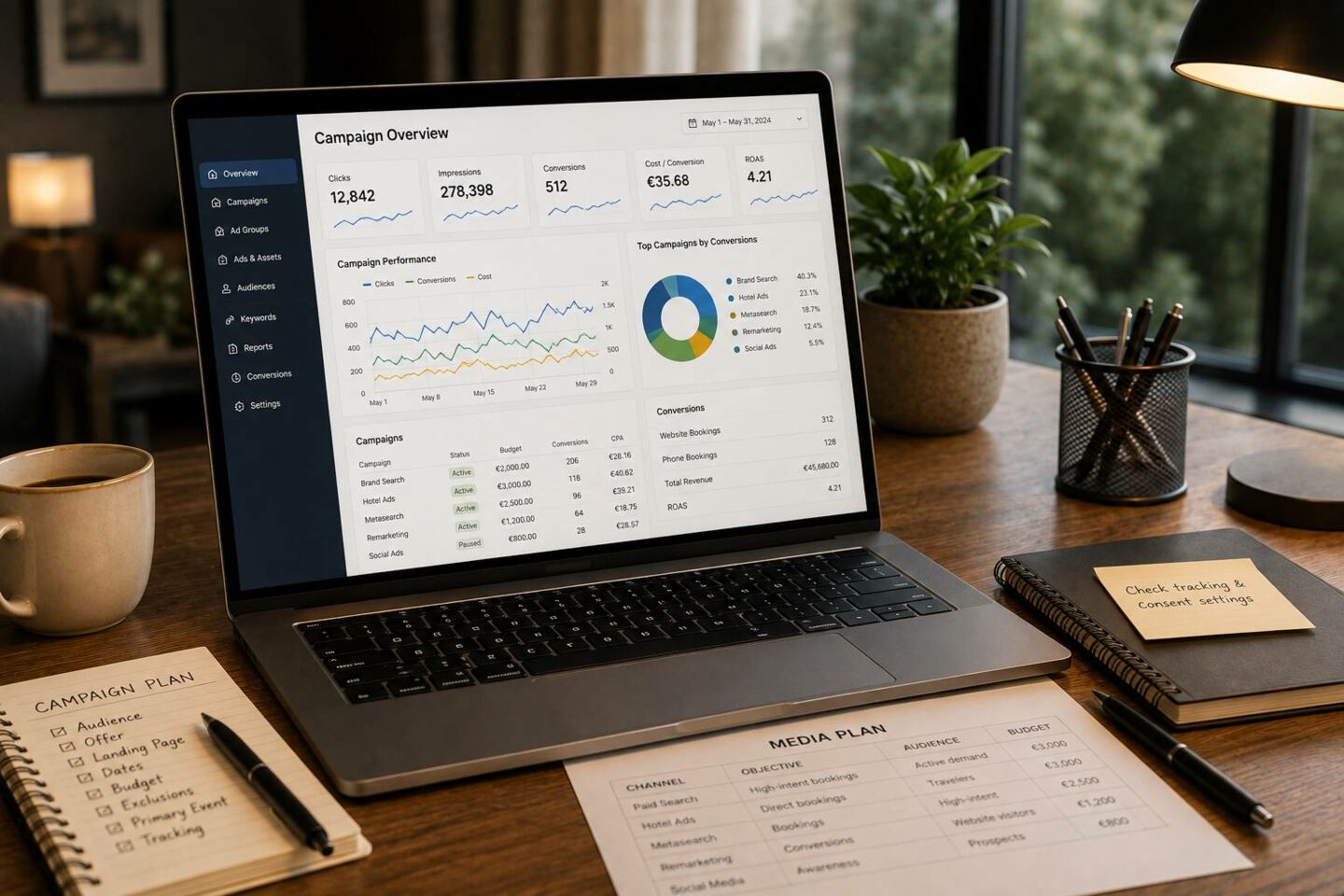
Paid search, hotel ads, metasearch, display, and social advertising can support a defined need. They should not run as one undifferentiated budget. Separate branded demand from broader destination searches. Separate prospecting from campaigns aimed at people who have already interacted with the hotel, where lawful.
Before launch, document the audience, offer, landing page, dates, budget, exclusions, and primary event. Add campaign parameters consistently. Check that booking and analytics systems can retain the information needed for reporting. Confirm consent and tag behavior with qualified privacy and analytics specialists.
Do not judge every campaign by the same metric. Awareness activity may be assessed through qualified reach and later branded demand. High-intent booking activity may be assessed through completed reservations, revenue, cancellations, and acquisition cost. A click-through rate alone does not show whether a campaign produced valuable stays.
Use email and CRM data with restraint
Email can support practical communication before a stay and relevant marketing after it. Keep transactional messages separate from promotions. Give marketing recipients a clear way to unsubscribe, maintain suppression rules, and avoid sending the same offer from conflicting systems.
Segmentation should improve relevance, not demonstrate how much data the hotel can collect. A previous guest who chose a winter package may be a suitable audience for a later seasonal message. That does not justify inferring unrelated personal traits. Review each automation trigger, template, audience rule, and expiration date.
Retention deserves its own plan. Check whether a returning guest can recognize the hotel’s value without receiving constant discounts. Useful messages may include a genuinely relevant reopening date, a new bookable package, or updated information about an experience the person asked to hear about.
Treat social media and video as formats, not strategies
No single video length suits every purpose. A short room overview, a detailed accessibility tour, and a chef demonstration solve different questions. Choose the format and length according to the audience, platform, and task. Test whether viewers take the intended next step instead of assuming that short content always wins.
Use current, accurate visuals. Show meaningful differences among room types and represent the property honestly. Obtain rights and permissions for music, guests, staff, and user-generated material. Label paid or invited creator relationships as required. Live video can be useful for a real event, but it is not a mandatory trend.
A sustainable social plan focuses on repeatable themes. These might include rooms, food, events, staff expertise, destination knowledge, and answers to booking questions. Adapt material to each channel rather than publishing the same cropped asset everywhere.
Manage reviews as public guest communication
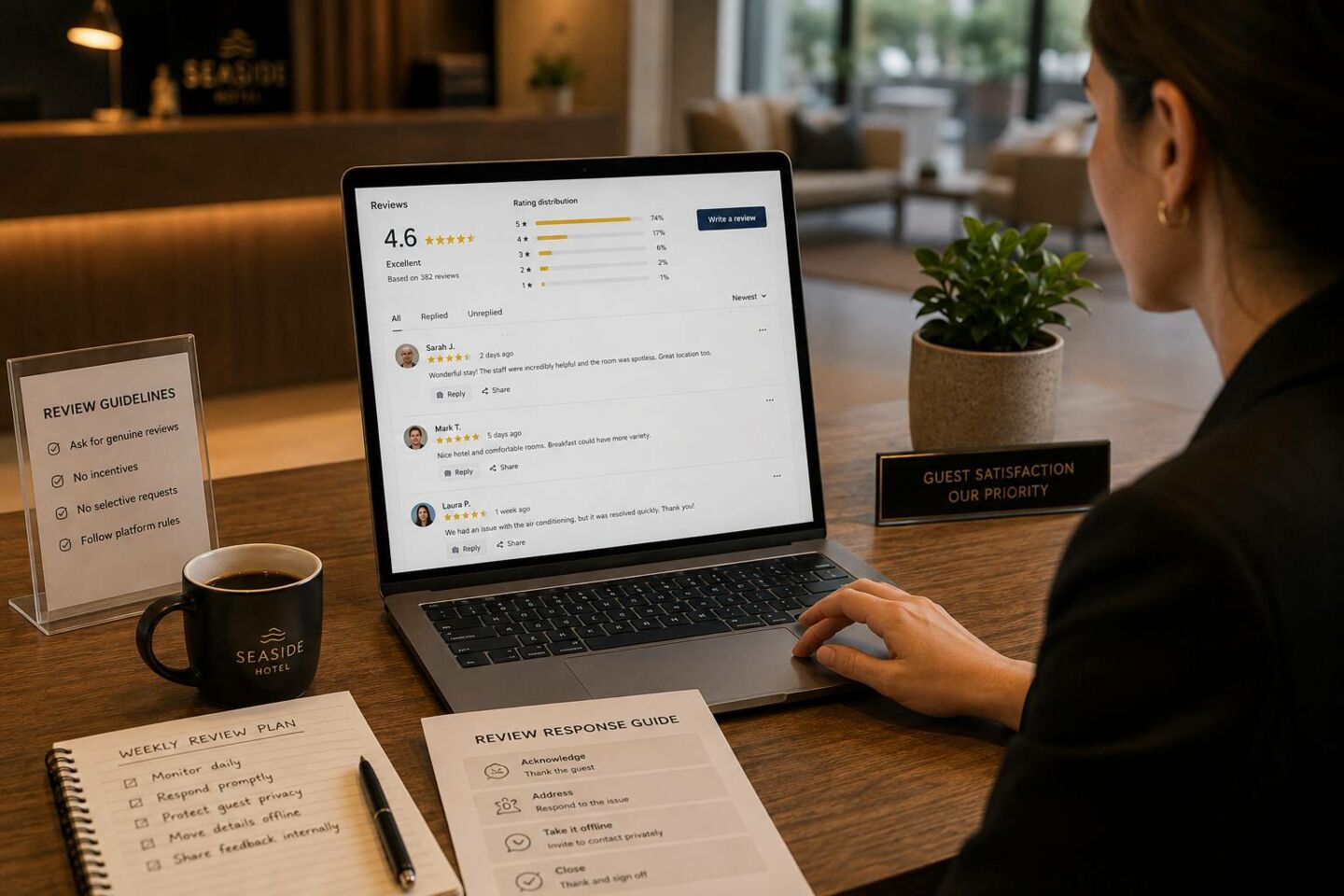
Reviews influence how travelers assess a property, but review requests must follow platform rules. Google permits businesses to ask customers for genuine reviews. It prohibits incentives offered in exchange for posting, changing, or removing them.
Assign responsibility for monitoring and replies. Protect guest privacy and move detailed service recovery to a private channel. A response should address the issue without publishing stay records or personal information. Patterns in verified feedback can also inform operations and future website content.
Plan content and experiments that teams can sustain
Maintain a working calendar that connects demand periods, offers, audiences, channels, owners, and deadlines. Store approved photographs, descriptions, translations, and usage rights in a managed library. Add review dates for evergreen pages so changed services and policies do not remain online.
For a meaningful test, write the hypothesis first. Change one major element where possible and keep the audience and period comparable. Decide in advance what result would justify a decision. Small samples and seasonal shifts can make a apparent winner unreliable, so record context and repeat important tests.
AI tools can help outline variations, summarize internal notes, or adapt approved copy. A human must verify facts, prices, policies, rights, brand voice, and privacy before publication. Generating many pages solely to capture search traffic conflicts with Google’s people-first guidance and can also create a large maintenance burden.
Measure the booking journey with context
Create a small measurement map. It may include qualified website visits, booking-engine starts, completed reservations, booking value, cancellations, campaign cost, and repeat stays. Define each metric and its source. Finance, booking, advertising, and analytics systems may count the same journey differently.
Attribution is not a perfect history of why someone booked. A guest may discover a hotel through an OTA, later search the brand, read reviews, and return through an email. Analytics tools assign credit according to a chosen model and available signals. Consent choices, device changes, offline contact, and tracking limits can leave gaps.
Compare reports, but do not force them to match without investigating definitions. Use confirmed reservations and financial records for commercial totals. Use channel and analytics reports to understand behavior and guide tests. Record model or tracking changes so a reporting shift is not mistaken for a market change.
How HotelFriend fits this framework
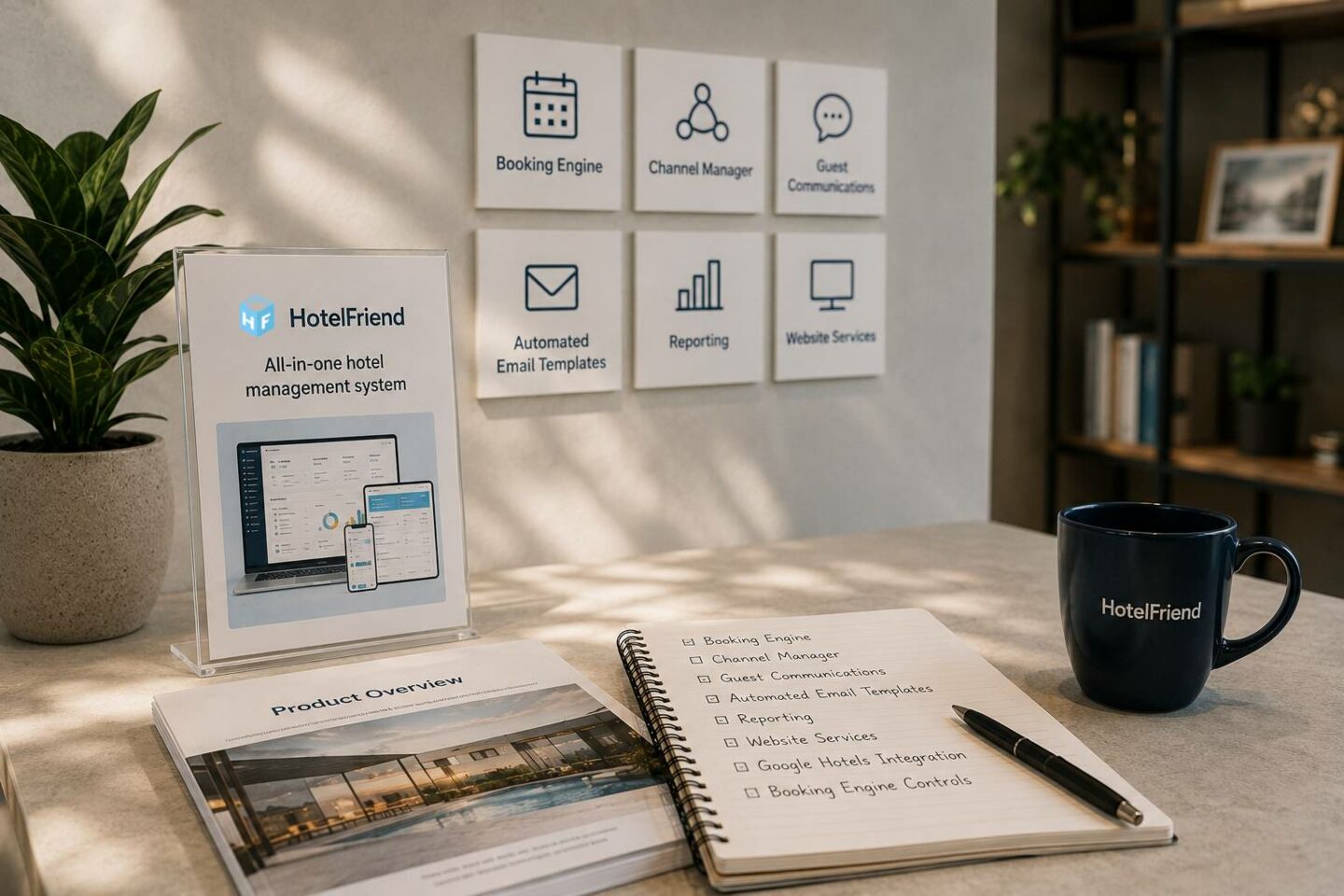
HotelFriend’s current product pages describe a Booking Engine, Channel Manager, guest communications, automated email templates, reporting, and website-related services. Separate first-party pages also describe a Google Hotels integration and booking-engine controls for hotel content and branding.
Those public descriptions do not establish a complete marketing CRM, consent-management platform, advanced segmentation system, or end-to-end attribution product. They also do not guarantee more bookings, higher revenue, stronger loyalty, or a particular return. Hotels should confirm the exact plan, market, integration, privacy controls, analytics behavior, fees, and support terms before building campaigns around any product.
Hotel marketing checklist
- ● Define one commercial goal, audience, period, owner, and primary measure.
- ● Confirm inventory, offer rules, operational capacity, and stop dates.
- ● Map the website-to-booking path on phone and desktop.
- ● Keep property details, images, rates, fees, and policies accurate.
- ● Review Business Profile ownership, hotel attributes, and review practices.
- ● Compare direct, OTA, free-link, and paid channels using consistent cost definitions.
- ● Collect only personal data needed for a stated, lawful purpose.
- ● Document consent, suppression, retention, access, and processor responsibilities.
- ● Test a clear hypothesis and record seasonal or operational context.
- ● Reconcile marketing reports with confirmed bookings and financial records.
Conclusion
Effective hotel online marketing is not a race to adopt every format. It is a managed system that links suitable demand to an accurate offer and a usable booking path. Clear goals, trustworthy content, balanced distribution, responsible data use, and careful measurement matter more than a prediction about the next channel.
Start with one booking or retention problem. Improve the weakest step, test the change, and keep the evidence. That approach is slower than chasing trends, but it gives hotel teams decisions they can explain and repeat.
