
Hotel PMS systems are no longer just back-office tools - in 2026, they are central to how modern hotels operate, grow, and compete. According to the 2026 HotelTechReport study, the global hotel PMS market is already worth more than US$8.5 billion. It is expected to keep growing at a strong pace through 2033, fueled by rising cloud adoption and the expanding role of AI.
Properties now use PMS platforms for much more than handling reservations, billing, and daily operations. They also depend on them to save time, streamline team workflows, drive more direct bookings, and create additional upsell opportunities. With 89% of hoteliers reporting weekly time savings and 91% linking PMS use to revenue growth, understanding what a hotel PMS system is and why it has become essential for any property looking to stay competitive in 2026.
PMS Software Definition
A Property Management System - often simply referred to as PMS software - is the operational backbone of a hotel, designed to streamline reservations, room management, guest communication, billing, and internal workflows through a single, connected platform.
How PMS Evolved in 2026?
In 2026, hotel PMS systems became more intelligent, connected, and mobile-first. The biggest shift is the growing role of AI and automation. Modern hotel PMS systems can support demand forecasting, personalized guest communication, smarter operational workflows, and faster decision-making across departments.
At the same time, hotels are putting more pressure on PMS vendors to deliver stronger connectivity and better business visibility. With margins tightening and OTA dependence still high, properties need systems that reduce manual reconciliations, connect data across teams, and support more profitable decisions.
What's the Difference Between PMS and HMS?
The main difference between PMS and HMS lies in scope. A Property Management System in hotel handles the core daily operations, including reservations, room assignments, check-in, guest profiles, billing, and housekeeping. It is the central system used to organize and streamline property operations.
A Hotel Management System (HMS) is a property software solution that often includes PMS features but extends beyond them. HMS also includes tools for Channel Manager, Booking Engine connectivity, POS, payment processing, reporting, CRM, accounting, and other hotel business functions. In other words, while a PMS system focuses on managing the property itself, an HMS is often built to support the hotel's wider operational and commercial needs.
The term PMS is commonly used when hoteliers want to distinguish the core operational platform from broader management suites. Understanding this distinction helps when evaluating which type of system your property actually needs.
PMS vs HMS: Key Differences
|
Feature |
PMS (Property Management System) |
HMS (Hotel Management System) |
|
Definition |
A system mainly focused on front-desk and property operations |
A broader system that manages overall hotel operations across multiple departments |
|
Main Purpose |
Handles reservations, check-ins/check-outs, room assignments, and billing |
Handles end-to-end hotel management, including PMS functions and additional operational modules |
|
Core Functions |
Reservations, front desk, billing, housekeeping, and guest profiles |
Reservations, billing, housekeeping, CRM, POS, revenue management, channel management, reporting |
|
Scope |
Narrower, property-focused |
Broader, hotel-wide management platform |
|
Users |
Front desk staff, reservation teams, housekeeping managers |
Front desk, housekeeping, sales, marketing, finance, management, and operations teams |
|
Department Coverage |
Mainly rooms division and front office |
Multiple departments, including rooms, restaurant, spa, finance, and management |
|
Integrations |
Often connects with channel managers, booking engines, and payment tools |
Usually includes or integrates PMS, POS, CRM, accounting, and analytics tools |
|
Complexity |
Simpler and easier to implement |
More complex due to wider functionality |
|
Best For |
Small to mid-sized hotels needing core operational support |
Larger hotels, chains, or properties needing centralized control across departments |
|
Cost |
Usually lower |
Higher due to advanced features and wider system coverage |
|
Scalability |
Limited compared to HMS |
More scalable for growing hotels and multi-property operations |
|
Example Use Case |
Managing room bookings, guest check-in, and invoicing |
Managing bookings, restaurant charges, guest communication, analytics, and overall hotel performance |
(Information is taken from open sources. Valid as of April 2026)
In a word, a Property Management System helps run a hotel's day-to-day operations. At the same time, a Hotel Management System typically offers a broader set of tools for managing the entire hospitality business.
Why Do You Need a PMS: Functionality and Main Features
The main purpose of any PMS system is to centralize data from across hotel departments into a single location. Using a Property Management System in hotel operations also means better integration with external third-party systems, such as payment processors and revenue management tools. As PMS technology continues to evolve, expanding connectivity with digital marketing platforms, energy management solutions, reputation management tools, and other hotel systems creates even greater operational and commercial value for hoteliers.

Here are the core features and functions a well-designed PMS Property Management System for hotels should include:
● Reservations & Front Desk is one of the most important parts of a Property Management System in hotel because it supports the daily flow of guest arrivals, stays, and departures. It allows hotel businesses to manage reservations from different channels, monitor room availability in real time, assign rooms, process check-ins and check-outs, and keep guest information organized in a single place. This way, hotels can reduce manual errors, avoid booking conflicts, and ensure smoother workflow.
These features also advance staff efficiency and guest satisfaction. Hotel managers can respond to guest requests more accurately, access booking details faster, and handle changes without switching between multiple systems. At the same time, a well-equipped PMS Property Management System helps create a faster, more professional guest experience while giving management better visibility into occupancy, room status, and daily operational performance.

● Distribution Channels Management is a key part of modern hotel PMS systems because it helps properties manage room availability, rates, and restrictions across multiple online booking channels from one place. This includes OTAs, brand websites, booking engines, and other distribution platforms. With real-time synchronization, hotels can keep pricing and inventory consistent across channels, reduce manual work, and lower the risk of overbookings caused by delayed or inaccurate updates.
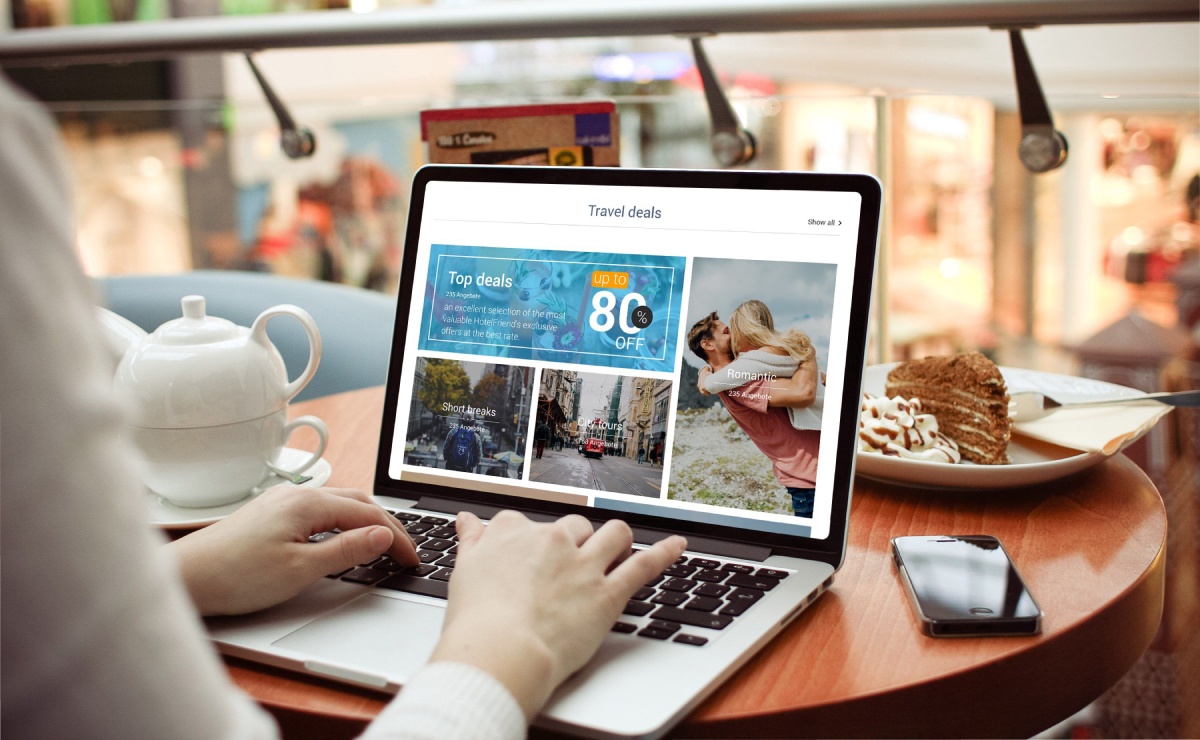
● Deal Management: This functionality helps increase the financial return from new bookings. In fact, guests who book special offers typically achieve an ADR that is 30% higher on average than those who make standard reservations. It helps hotels create, organize, and manage special offers, packages, discounts, and rate plans more effectively within a single system.
Hotel teams can use PMS software to set pricing rules, define booking conditions, apply seasonal offers, and tailor deals to specific guest segments, rather than managing promotions manually across different channels. This makes it easier to launch promotions faster and keep them consistent.

● Staff Management is a core component of hotel PMS systems. It gives hospitality facilities a practical way to organize team responsibilities, control user access, and maintain day-to-day coordination. Hotels can define who has access to specific functions, assign roles by department, and support clearer communication across operational teams - resulting in a more structured workflow and fewer errors from overlapping responsibilities or disconnected processes.

● Accounting & Invoicing is a core component of PMS systems. It allows properties to manage financial transactions with great accuracy. Hotels can generate invoices, track incoming payments, record charges, handle taxes, and keep all billing data directly linked to reservations and guest profiles - without jumping between separate tools or systems. By handling these processes in a single system, hotels can reduce manual work, minimize billing errors, and maintain clearer financial records throughout daily operations.

● Reporting & Analytics is an essential module that helps hotels turn operational and financial data into clear, actionable insights. This function gives hotel businesses better visibility into performance by tracking metrics such as occupancy, revenue, booking sources, average daily rate, and guest trends. With accurate reporting in one centralized system, management can identify patterns, measure results, improve planning, and make smarter strategic and operational adjustments.

● CRM and Guest Management functionality helps hotels store, organize, and use guest data more effectively to deliver a more personalized and consistent experience. Within a PMS, this typically includes guest profiles, stay history, preferences, contact details, special requests, and communication records, allowing staff to better understand each guest and respond more accurately to their needs.

● Native Mobile App extends PMS Property Management System functionality beyond the front desk. It allows hotel staff to access key operations from smartphones or tablets in real time. This can include reservations, room status, housekeeping updates, guest communication, task management, and performance monitoring.

● Point-of-Sale & Order Management functionality helps hotels manage on-property sales, guest orders, and service charges in a more accurate and efficient way. It allows restaurants, bars, spas, room service, and other hotel outlets to record purchases directly against the guest's stay, issue accurate invoices, and support secure payment processing.
The key is to choose a PMS system for hotel operations that not only supports your current workflows but also integrates seamlessly with the tools you use today and may need in the future.
Advantages of PMS for Hotels
A hotel PMS system provides properties with a more efficient, organized way to manage daily operations through a centralized platform. It helps reduce manual work, improve coordination across departments, and deliver a smoother experience for both staff and guests. They include:
● Client focus
Client focus is one of the main advantages of hotel PMS systems, as it helps properties deliver a more personalized, guest-centered experience. By keeping guest profiles, preferences, stay history, contact details, and special requests in one place, the system gives hotel staff quick access to the information they need to provide more relevant and consistent service throughout the guest journey.
For hotel businesses, this leads to better communication, faster response to guest needs, and a stronger ability to build long-term relationships. A client-focused PMS hotel solution can help improve satisfaction, encourage repeat bookings, support loyalty efforts, and create a more professional experience that makes guests feel recognized and valued.

● Employee efficiency
Employee efficiency is one of the biggest benefits of implementing a PMS system in hotel operations, as it helps staff complete daily tasks faster and with fewer errors. By consolidating reservations, room status, guest information, billing, housekeeping, and internal workflows into a single system, a PMS reduces manual work and eliminates the confusion that often comes from using disconnected tools.
For hotel businesses, this means smoother coordination across departments and better use of staff time throughout the day. Managers can respond to guest requests more accurately and handle routine processes more efficiently, thereby improving productivity, reducing operational pressure, and supporting a higher standard of service.
Value for hoteliers
A hotel PMS delivers clear value for hoteliers by helping them run operations more efficiently, reduce manual workload, and maintain better control over daily performance. It also supports stronger guest service, smoother team coordination, and more informed business decisions.
● Rates on point
Rates on point is one of the key benefits of hotel PMS systems because it allows hotels to manage room pricing more accurately and consistently across their operations. By centralizing rates, availability, and booking conditions, a PMS helps reduce the risk of pricing mistakes, inconsistent information, and outdated rate updates that can negatively affect both revenue and guest trust.
For hoteliers, this means better control over pricing strategy and stronger visibility into key performance indicators such as occupancy, ADR, RevPAR, booking pace, and channel performance. With access to these KPIs, hotels can adjust rates more confidently based on demand, seasonality, promotions, and market conditions, helping support smarter revenue decisions, more reliable bookings, and stronger overall financial performance.

● High sales
Higher sales with a Channel Manager is one of the key advantages of modern PMS systems because it helps properties distribute rooms more effectively across multiple online sales channels. By connecting OTAs, booking platforms, and direct booking engines into a single system, a channel manager keeps rates and availability up to date in real time, reducing the risk of overbookings, pricing inconsistencies, and missed booking opportunities.
For hoteliers, this means stronger online visibility, better inventory control, and improved performance across distribution channels. A channel manager also makes it easier to monitor channel results, optimize sales strategy, and increase occupancy by keeping rooms consistently visible and bookable where potential guests are actively searching.
How Hospitality Trends Influence Hotel PMS
Hospitality trends such as AI-driven automation, mobile self-service, and more connected hotel operations are reshaping what properties expect from modern hotel PMS software in 2026. As a result, today's PMS system, which hotel managers depend on, is evolving beyond basic reservations and front-desk tasks to support smarter workflows, real-time visibility, and a more seamless guest experience across departments.
● Cutting-edge technology
Cutting-edge technology is one of the defining advantages of modern hotel PMS software, enabling properties to access more advanced, flexible, and efficient ways to manage daily operations. With cloud-based infrastructure, mobile functionality, automation, real-time data access, and seamless integrations, today's PMS hotel solutions help properties move beyond outdated processes and operate in a faster, more connected environment.
For hoteliers, this means better operational visibility, quicker decision-making, and stronger adaptability as guest expectations and market conditions continue to change. Advanced PMS technology also supports innovation across the property, from smarter staff workflows and self-service guest options to improved system connectivity and more scalable hotel management overall.
● Comfort and sustainability
Comfort and sustainability are critical to modern hotel operations. PMS brings reservations, housekeeping, maintenance, and guest communication together into one system, helping hotels create a smoother, more convenient guest experience. Faster service, better room readiness, more accurate preference management, and improved coordination between departments all contribute to a more comfortable, consistent stay.
At the same time, a hotel PMS can help properties run more efficiently while prioritizing sustainability. Hotels can improve workflows, and better use staff time, providing greater control over room occupancy, housekeeping schedules, energy-related processes, and reporting. For hoteliers, this helps create a practical balance between guest comfort and responsible operations, improving service quality while supporting long-term sustainability goals.
How to Choose the Right PMS to Meet Your Needs?
Want to purchase a new hotel management system, but don't know what to look for? To make this task easier for you, we've compiled a quick checklist of items worth your attention. Check it out before making the final decision!
Some of the must-have features of the best PMS include:
- ● Reservations and front desk management
- ● Real-time room inventory control
- ● Channel management integration
- ● Booking engine connectivity
- ● Housekeeping management
- ● Billing and invoicing tools
- ● Payment processing integration
- ● Reporting and analytics
- ● CRM and guest profile management
- ● Rate and deal management
- ● Point-of-sale and order management
- ● Staff and user access management
- ● Mobile access or a native mobile app
- ● Third-party integrations with hotel systems
- ● Cloud-based access and data security
However, before evaluating different PMS solutions, it is important to determine which type of software best fits your property's needs. You should first consider whether a cloud-based PMS or an on-premise system is the better choice, and whether you need specific modules or a more comprehensive all-in-one platform.
Cloud-Based vs. On-Premises Solutions
When choosing a hotel PMS, one of the first decisions is whether a cloud-based or on-premises system is the better fit for your property. A cloud-based PMS system is hosted online and accessed via the internet, making it easier to manage operations remotely, receive automatic updates, and connect with other hotel systems. An on-premises PMS is installed on the hotel's own servers and infrastructure. It gives the property greater direct control over the system, but often requires ongoing IT support.
For many hotels in 2026, cloud-based PMS software is becoming the preferred option because it offers greater flexibility, scalability, and easier integration with modern hospitality tools. However, on-premises systems may still suit properties that want more internal control over their infrastructure or have specific operational requirements. The right choice depends on your budget, technical resources, security preferences, and long-term growth plans.
Cloud-based PMS
- ● Hosted online and accessed through the internet
- ● Lower upfront hardware and infrastructure costs
- ● Automatic updates and easier maintenance
- ● Remote access for staff and management
- ● Better scalability for growing hotel businesses
- ● Easier integration with third-party systems
- ● Well-suited to multi-property and mobile operations
On-premises PMS
- ● Installed locally on the hotel's own servers
- ● Greater direct control over infrastructure and data environment
- ● Often requires a higher upfront investment
- ● Ongoing maintenance usually depends on internal IT resources
- ● Software updates may be slower or more manual
- ● Less flexible for remote access and expansion
- ● Can suit properties with specific internal policies or legacy system needs
In short, a cloud-based PMS offers greater flexibility, mobility, and easier scalability. At the same time, an on-premises PMS gives hotels greater direct control but often entails higher maintenance and infrastructure costs.

Process-Specific vs. Complex Solutions
Another key decision when selecting a property management system for your hotel is determining whether you need a process-specific solution or a complex, all-in-one PMS. Process-specific systems focus on one operational area - housekeeping, channel management, billing, or guest communication, for example. A complex PMS, on the other hand, brings multiple hotel functions together into a single platform, enabling properties to handle a wider range of day-to-day operations through a single connected system.
The right choice depends on how your hotel operates, how many systems you already use, and how much control or flexibility you need. A complex PMS system that hotel managers typically prefer is often the better option for properties seeking deeper integration, more centralized control, and a scalable solution that supports multiple departments simultaneously.
Process-specific PMS solutions:
- ● Focus on one specific operational area
- ● Easier to adopt for targeted needs
- ● Can be more affordable for smaller properties
- ● Useful when only one function needs improvement
- ● May work alongside existing hotel software
- ● Often simpler for staff to learn and use
- ● Can lead to more fragmented workflows if too many separate tools are used
Complex all-in-one PMS solutions:
- ● Cover the full range of hotel functions without switching between systems
- ● Give managers a clearer view of what's happening across every department
- ● Cut reliance on separate, disconnected tools that rarely talk to each other
- ● Keep data accurate and teams on the same page
- ● Work best for larger properties or hotels that are actively scaling
- ● Take more time to set up, train staff on, and roll out compared to simpler options
In short, process-specific software is a practical option for handling specific operational needs. At the same time, a complex PMS is better suited for hotels seeking a more integrated, scalable, and centralized management system.
HotelFriend Software Benefits
HotelFriend’s mix of revenue-driving tools, operational efficiency, and strong credibility makes it an appealing option for hotels in 2026. A built-in booking engine, real-time distribution across 200+ OTAs, integrated payment handling and invoicing, and real-time housekeeping coordination all work together to drive commission-free direct bookings. Smaller properties benefit from cloud access, no additional server or IT costs, AWS-based reliability, and GoBD-compliant accounting.
The right PMS property management system for your hotel should align with your operational needs, team size, and growth plans. On top of that, HotelFriend emphasizes ISO 9001-certified service processes and ISO/IEC 27001-certified information security processes, which strengthen its value proposition for hotels that care about implementation quality, support, and data protection.
Table of Key HotelFriend Benefits in 2026
|
Benefit |
Description |
Why It Matters in 2026 |
|
All-in-one hotel operations |
HotelFriend brings together reservations, front desk, housekeeping, billing, guest communication, and service management into a single platform. |
Hotels can reduce system switching, simplify workflows, and manage operations from a single place. |
|
Automation of daily tasks |
The platform automates routine processes, including bookings, check-ins, invoicing, task assignment, and guest messaging. |
Automation saves time, reduces manual work, and helps teams operate more efficiently with fewer errors. |
|
Improved guest experience |
HotelFriend supports smoother guest journeys through faster service, digital communication, and more personalized interactions. |
In 2026, guest expectations are higher, so better service can improve satisfaction, reviews, and loyalty. |
|
More direct bookings |
The system helps hotels strengthen direct sales through integrated booking tools and smoother reservation processes. |
Direct bookings help hotels reduce dependence on third-party channels and improve profit margins. |
|
Upselling opportunities |
HotelFriend enables hotels to promote extra services, upgrades, and add-ons during the guest journey. |
This creates new revenue streams and increases the value of each booking. |
|
Better team efficiency |
Centralized workflows and automated task management help staff coordinate more effectively across departments. |
Hotels can improve productivity, reduce delays, and deliver more consistent service. |
|
Centralized data and reporting |
The platform gives hotels access to operational and guest data in one place, along with reporting tools. |
Managers can make faster, more informed decisions based on real-time insights. |
|
Flexible and scalable setup |
HotelFriend can support different property types and adapt as operational needs grow. |
This makes it suitable for hotels that want a system that can scale with their business in 2026 and beyond. |
|
Digital service management |
The platform supports digital handling of guest requests, internal tasks, and service workflows. |
Hotels can respond faster to guest needs while keeping service operations organized. |
|
Revenue growth support |
By combining automation, upselling, direct bookings, and operational efficiency, HotelFriend supports stronger overall performance. |
In a competitive market, hotels need technology that helps both cut costs and grow revenue. |
(Information is taken from open sources. Valid as of April 2026)
Conclusion
Choosing the right PMS system is one of the most important operational decisions a hotel can make. A well-implemented platform does more than manage bookings - it connects every department, supports smarter pricing, improves the guest experience, and helps properties adapt as the industry evolves.
Today's PMS systems have more capabilities than earlier generations. Modern hotel PMS systems deliver visibility and control through AI-driven automation and mobile-first workflows, seamless OTA connectivity, and real-time analytics to stay competitive in 2026. A correct choice of PMS system in hotel can help your team reduce manual work, improve staff coordination, and keep you in control of every guest interaction.
The decision ultimately comes down to fit. Consider your property type, team size, budget, and the integrations you depend on. If you need an all-in-one hotel PMS system designed for independent hotels and smaller chains - one that covers front desk, channel management, housekeeping, payments, and direct bookings in a single cloud-based platform - HotelFriend is worth exploring. Visit the platform to see how it handles the workflows that matter most to your operation.