
Quick overview: how AI hotel booking works
Travelers can now book a hotel in AI Mode by typing one sentence into a chat and getting a shortlist in seconds, and sometimes finishing the reservation without leaving the conversation. This shift in AI travel planning changes how guests find hotels and who gets the booking.
Google AI Mode hotel booking. Agentic hotel booking began rolling out in AI Mode on August 27, 2026, first for U.S. travelers. “Agentic” doesn’t mean the AI books alone: the guest still picks the room, reviews the terms and approves payment. The flow is:
- The traveler describes the trip in plain language.
- AI Mode returns matching hotels.
- The traveler selects a room and checks cancellation terms.
- They tap “Continue on Google” and pay with Google Pay.
Google is not the seller. The hotel or OTA charges the card, sends the confirmation and handles support. Launch partners include Booking.com, Expedia, Hilton, IHG, Marriott, Choice, Wyndham, Priceline, Hotels.com and Trip.com.
Other AI hotel booking tools.
- ChatGPT: Travelers can book a hotel with ChatGPT through Expedia and Booking.com apps, but the final step usually happens on the OTA’s site.
- Perplexity: Tripadvisor and Selfbook offer hotel booking, and Expedia is linked to its Comet browser.
- Meta AI: Its travel agent is set to offer hotel bookings through Expedia.
- OTA planners: Booking.com, Expedia and Tripadvisor each have their own AI trip-planning assistants.
What does this mean for your hotel, and how do you protect hotel direct bookings? Read on.
Where agentic hotel booking stands today
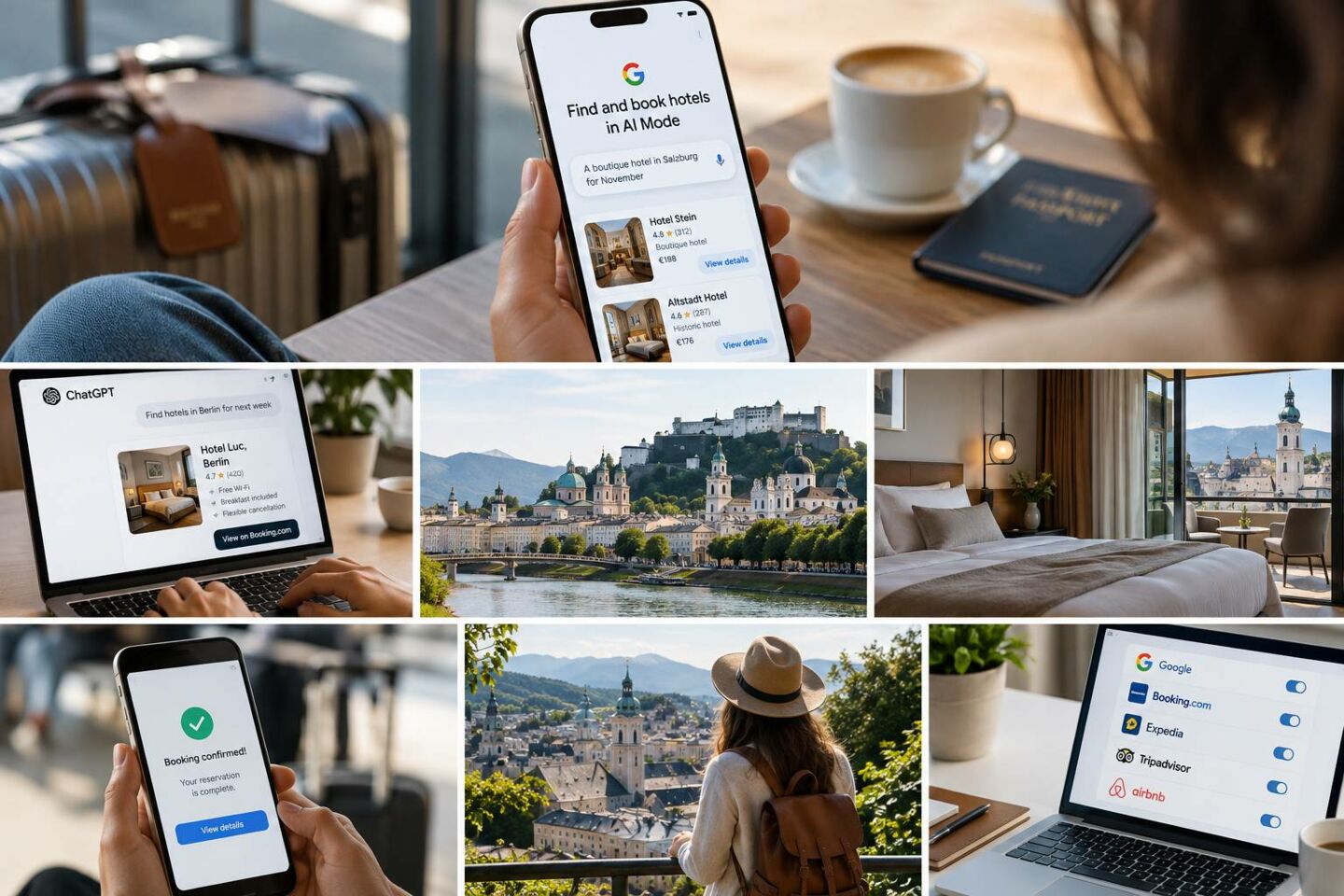
Google AI Mode. Google confirmed a limited US test of AI agent hotel booking on August 7, 2026, with Amadeus as technical partner. The feature went live in AI Mode on August 27, 2026, initially in the U.S. Ten launch partners include Booking.com, Choice, Expedia, Hilton, IHG, Marriott, Priceline and Wyndham, and the hotel or platform stays the merchant of record rather than Google. Google launches AI agent hotel booking test in the United States +2
ChatGPT. The picture is different here. OpenAI reportedly dropped native checkout for travel in March 2026 and moved transactions to third-party apps. Booking.com and Expedia are built into the chat as apps, and results link back to the OTA to finish the booking. A guest who compares options inside an OTA app in ChatGPT completes the booking on that platform, commission included. prostay, akia
The takeaway is that every AI tool handles booking differently, and the rules are still changing. The strategy that works across all of them is the same: be easy to find, easy to trust and easy to book direct.
1. Make your data the single source of truth
AI assistants recommend what they can read and verify. If your website says breakfast is included, your OTA listing says it isn’t and your Google profile is silent, the assistant may leave you out or get it wrong.
- Audit room types, amenities, check-in times, pet and parking policies, and cancellation terms across your website, Google Business Profile and all channels.
- Use specific, factual descriptions (“rooftop terrace with river view, open 7:00–22:00”) instead of generic marketing language.
- Keep photos current and add descriptive captions. Better photos, reviews and details tend to push a property higher in AI-driven results.
2. Get your live rates into Google AI Mode hotel booking
An assistant cannot sell a rate it cannot see. What a hotel controls is the rate that reaches Google, the content behind the listing and the link that carries the guest to its own booking page. hospitalitynet
- Ask your booking engine or channel manager whether you can send rates and availability to Google’s free booking links. Some providers push rate and availability data to Google commission-free. hotellinksolutions
- Ask whether your PMS, CRS or booking engine supports agentic hotel booking, since Google’s flow depends on partners connecting through technical infrastructure.
- Look at tools built for AI platforms. For ChatGPT, for example, The Hotels Network app lets hotels show brand-verified content, live rates and direct booking links that route guests to the hotel’s own website, and it is open to chains, groups and independents. Evaluate any such vendor on cost, data control and track record before you sign. newswire
3. Write for AI travel planning: answer questions, not keywords
Guests who plan trips with AI ask full questions, and your content should answer them.
- Add an FAQ covering what guests actually ask: distance to the station, parking, family rooms, late check-in, accessibility, dog policy.
- Describe who your hotel is for (“ideal for couples seeking a quiet weekend”) and who it isn’t. Clear positioning helps an assistant match you to the right guest.
- Highlight what makes you distinct: a local partnership, a signature breakfast, a view. Assistants summarise, so give them clear points to pick up.
- Keep reviews healthy and reply to them. Review content feeds the picture AI tools build of your property.
4. Be ready when guests book a hotel with ChatGPT
Many travelers start in ChatGPT, and the answers they get are shaped heavily by OTA listings and web content. To be part of the conversation:
- Make sure your own website clearly states your facts, policies and what makes you different.
- Keep your OTA listings accurate, since these are often the source AI tools draw on.
- Explore direct-booking connections for AI platforms through your technology providers.
5. Protect your hotel direct bookings
Even when a booking happens inside an AI flow, you can keep it direct. IHG says pilot bookings are processed as direct bookings, and guests can also be redirected to the group’s website for loyalty member rates. Independents can borrow the logic: phocuswire
- Offer direct-only perks, such as early check-in, a welcome drink or a flexible cancellation window, and state them clearly in your listing content.
- Make sure the total price, taxes and cancellation terms are transparent. The guest will compare them in seconds.
- Collect the guest’s details properly at booking so you can send pre-arrival messages, upsell and invite them back, whichever channel they came through.
6. Don’t abandon OTAs, but don’t depend on them
OTAs are first in line in several AI tools, so keeping those listings accurate still matters. The goal is balance: strong OTA content to be discovered, plus a direct offer compelling enough to win the booking when the guest compares.
7. Test how AI describes your hotel
Once a month, ask Google AI Mode, ChatGPT, Gemini and others questions a guest would ask, such as “best hotels in [your town] for families” or “tell me about [your hotel name]”. Note whether you appear, whether the facts are right and which competitors show up. Fix errors at the source, which is usually your own website, Google profile or a channel listing.
8. Keep expectations realistic
Google’s rollout starts in the US, but the way Google reshapes the search and booking journey rarely stops at a single market. The first wave is also likely to favour simple bookings over complex packages, because a hotel stay involves dates, room type, cancellation flexibility, taxes, loyalty programs and more. Treat now as a preparation window. Hotels that fix their data and direct-booking offer today will adapt faster as more markets and assistants come online. hotellinksolutionskarlobag
Your 30-day action plan
You don’t need a big budget or a technical team to get started. Spend a few hours a week for one month, and your hotel will be far better prepared for AI hotel booking.
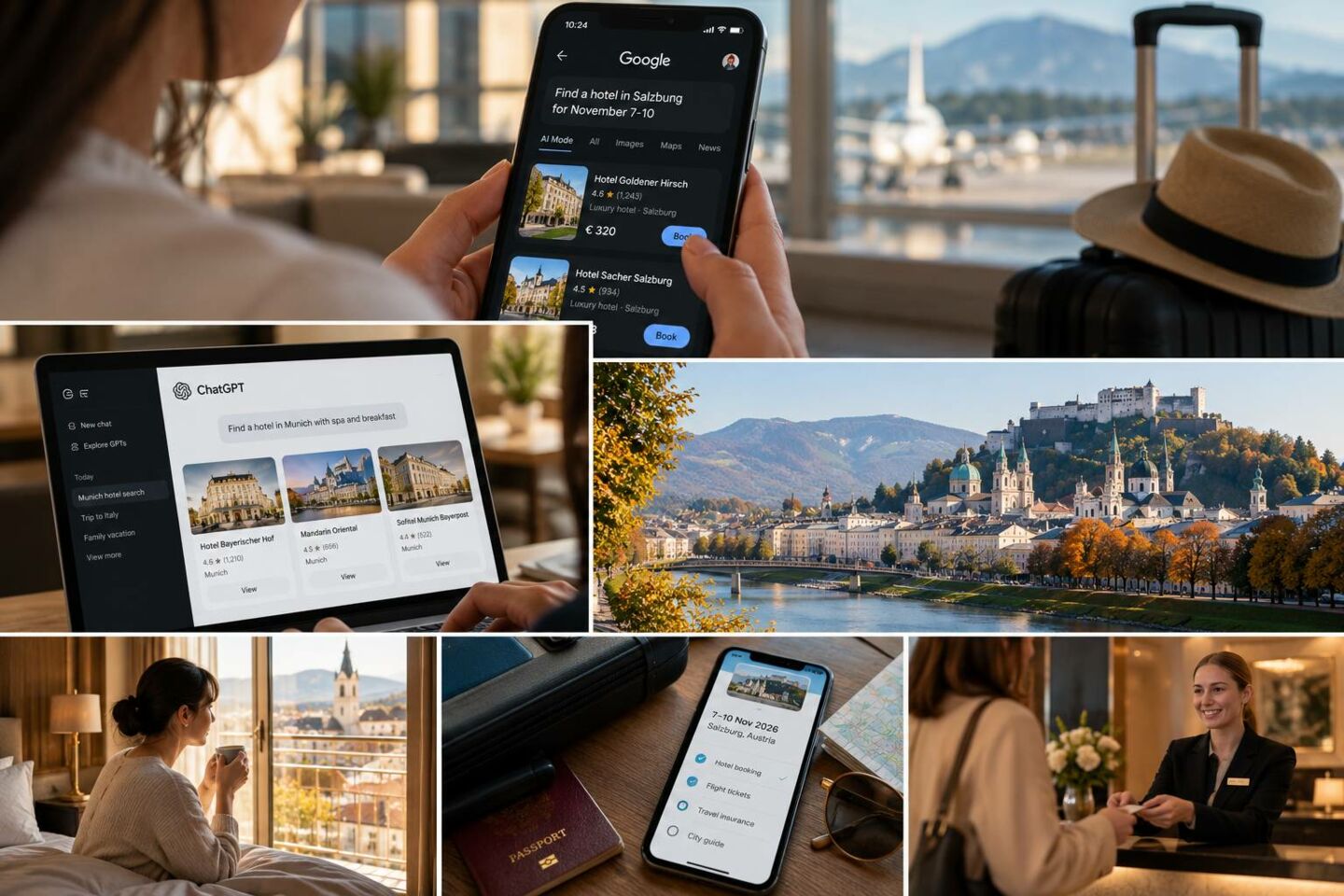
Week 1: Make your information consistent
AI tools collect facts about your hotel from many places, and when those places disagree, the assistant may show wrong details or skip you.
- Compare your website, Google Business Profile and OTA listings.
- Check room types, breakfast, parking, pet policy, check-in and check-out times, cancellation rules and photos.
- Write down every mismatch and correct it everywhere.
Result: one accurate version of your hotel across all channels.
Week 2: Find out what your technology can do
- Ask your booking engine, channel manager and PMS: Can you send my rates to Google, including free booking links? Do you support Google AI Mode and AI platforms like ChatGPT? What is your roadmap?
- Ask what each option costs and who controls the guest data.
- Keep the answers in one document so you can compare providers.
Result: a clear picture of what you can do now and what needs an upgrade.
Week 3: Write for real guest questions
- Add a short FAQ to your website covering the most common questions.
- Replace vague phrases with specifics. Instead of “a lovely, comfortable room”, write “28 m² room with balcony, river view and king-size bed”.
- Say who your hotel suits best, such as couples, families or business travelers.
Result: content that an AI tool can read, understand and recommend.
Week 4: Test, fix and strengthen your direct offer
- Ask Google AI Mode, ChatGPT and Gemini questions about your town and your hotel.
- Note whether you appear, whether the facts are correct and which competitors are recommended.
- Fix errors at the source, usually your website or a listing.
- Define a few perks available only when booking direct, and mention them clearly in your content.
Result: a hotel that is accurate, visible and gives guests a reason to book direct.
Then repeat. Run the Week 4 test once a month, because AI tools and their answers change quickly.
Bottom line
Guests who book a hotel in AI Mode, ChatGPT or other assistants are changing the front door of your business. AI tools don’t remove you from the booking, but they decide which hotels get considered. Accurate data, live rates, clear content and a compelling direct offer are the best way to be both visible and direct.
