
Digital transformation in hospitality is no longer about having “more tools.” It is about having the right architecture.
Many hotels believe they are running an all-in-one PMS. In reality, they are operating a chain of connected systems from multiple providers. On the surface, everything appears integrated. Behind the scenes, however, complexity grows, data flows through fragile connections, and operational efficiency depends on synchronization between independent vendors.
For modern hotels—especially large properties and groups—the real competitive advantage lies not in the number of features, but in the architecture behind them.
Let’s break down the difference.
The Single-Provider Ecosystem
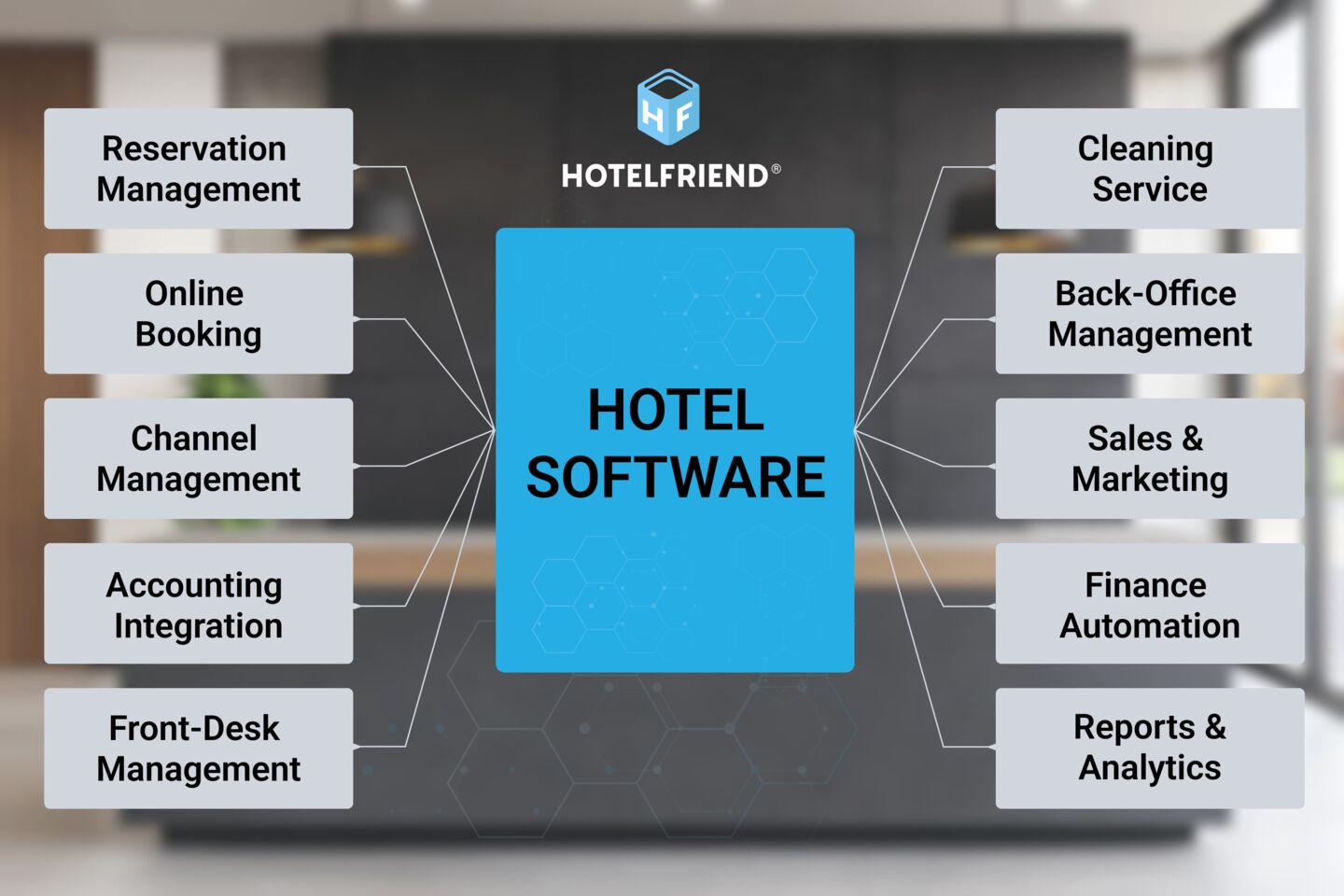
A single-provider ecosystem means a hotel purchases several modules from the same vendor.
For example:
- ● PMS
- ● Channel Manager
- ● Booking Engine
- ● Housekeeping
- ● Revenue Management
- ● POS
- ● Event Management
All are delivered under one contract and brand.
What this solves
- ● One commercial agreement
- ● One support team
- ● More consistent user interface
- ● Better accountability
What it may not solve
In many cases, these modules were originally separate products acquired or connected over time. Even if they come from one vendor, they may still function as loosely connected systems in the background.
This improves coordination compared to five separate providers—but it does not automatically mean the architecture is unified.
The Marketplace of Integrations
This is the most common model in the hospitality industry today.
A PMS acts as a “hub,” and hotels add:
- ● Third-party revenue management
- ● External booking engine
- ● Independent POS
- ● Separate event management software
- ● Accounting tools
- ● Guest communication platforms
Everything connects via APIs.
On paper, this looks flexible.
In reality, it creates:
- ● Multiple login environments
- ● Different UX logic across systems
- ● API dependency for every data exchange
- ● Synchronization delays
- ● Increased IT coordination
- ● Risk of data mismatches
When something goes wrong, vendors often shift responsibility:
- ● “It's not our system.”
- ● “It’s the API.”
- ● “It’s the other provider.”
For large hotels, this fragmentation slows operations, complicates reporting, and increases long-term costs. Flexibility becomes complexity.
What Really Matters About APIs
APIs are not the problem. They are essential.
The real question is: Where should APIs be used — and where should they not?
APIs make perfect sense when connecting to external, specialized systems that cannot realistically be part of the PMS core.
Examples of Critical Integrations That Require APIs
Door Lock Systems
A hotel PMS must integrate with physical access control systems. Room access must sync with reservations in real time.
- ● Instant key activation upon check-in
- ● Automatic key deactivation at check-out
- ● Improved guest experience
- ● Enhanced security and audit tracking
- ● Reduced manual workload at the front desk
Accounting Systems
Hotels often rely on specialized accounting software. Financial exports must comply with strict accounting standards.
- ● Accurate and structured financial exports
- ● Faster month-end closing
- ● Reduced manual reconciliation
- ● Lower accounting workload
- ● Compliance with national regulations
E-Invoicing & Fiscal Compliance
In many countries, hotels must comply with regulatory requirements.
- ● Legally compliant invoice generation
- ● Automated tax reporting
- ● Reduced regulatory risk
- ● Transparent financial documentation
- ● Operational continuity
Existing POS Systems or Self-Service Kiosks
If a hotel already operates installed hardware, replacing it may create unnecessary capital expenditure.
- ● Avoidance of hardware reinvestment
- ● Reduced implementation time
- ● Minimal operational disruption
- ● Protection of previous investments
- ● Faster ROI
One Integrated Architecture vs. Fragmented System Landscape
When evaluating hotel technology architecture, the real difference becomes clear when comparing operational impact — not just feature lists.
|
Criteria |
Single Provider (Unified Platform) |
Five Different Providers (Integrated Setup) |
|
System Architecture |
One shared core database and logic |
Multiple independent systems connected via APIs |
|
Data Synchronization |
Real-time, native data flow |
API-based synchronization, potential delays |
|
User Experience |
One interface, consistent workflows |
Multiple interfaces, different UX logic |
|
Login & Access |
Single login environment |
Multiple logins and permission structures |
|
Reporting |
One source of truth, centralized reporting |
Data consolidated from multiple systems |
|
Training Effort |
One system to learn |
Staff must learn several systems |
|
Support & Accountability |
One support team, clear responsibility |
Multiple vendors, shared responsibility |
|
Troubleshooting |
Faster issue resolution |
Vendor coordination required |
|
Integration Maintenance |
Minimal internal integration management |
Continuous API monitoring and updates |
|
Scalability |
Easier to scale across departments and properties |
Each new system adds integration complexity |
|
Total Cost of Ownership |
Predictable long-term cost structure |
Multiple licenses, integration fees, hidden costs |
|
Operational Risk |
Lower system friction |
Higher dependency on synchronization stability |
|
Innovation Readiness |
Clean data foundation for automation and AI |
Data silos limit advanced innovation |
Why Unified Architecture Reduces Complexity
1. Real-Time Data Integrity
Room updates, billing changes, and reporting adjustments happen instantly without API delays or manual corrections.
2. Simplified Operations for Staff
Staff work within one environment, reducing onboarding time and operational errors.
3. Centralized Reporting
Revenue, operational, guest, and event data originate from one database, improving forecasting and decision-making.
4. Lower Total Cost of Ownership
- ● Reduced integration maintenance
- ● Fewer license overlaps
- ● Less IT coordination
- ● Elimination of redundant infrastructure
5. Scalability for the Future
Automation, AI-driven pricing, personalized guest journeys, and multi-property management require clean and reliable data.
Unified architecture enables innovation across the entire hotel ecosystem.
Strategic Question for Hoteliers
The key question is no longer: “Does this PMS integrate with everything?”
The more important question is: “How many systems are actually running behind this interface?”
Integration is not the same as unification.
The Future of Hotel Technology
Architecture will matter more than feature lists.
- ● Stability
- ● Real-time synchronization
- ● Operational transparency
- ● Scalable infrastructure
- ● Reduced system friction
True platform architecture delivers this. The future belongs not to hotels with the most integrations, but to those with the cleanest technological foundation. And in modern hospitality, foundation is strategy.
By choosing a flexible, integrated solution and using technology thoughtfully, hotels can turn the front desk from an operational bottleneck into a true driver of performance and guest satisfaction.