
MICE has become one of the most important drivers of growth in the hospitality industry, especially as business travel and event demand continue to recover across Europe. More than just hosting meetings or conferences, MICE helps hotels increase occupancy, attract higher-value guests, and generate additional revenue from event-related services. This article explains what is MICE, why MICE meaning in hospitality matters so much for hotels, and how current market trends show its growing impact.
What is MICE, and why is it essential for the hospitality industry?
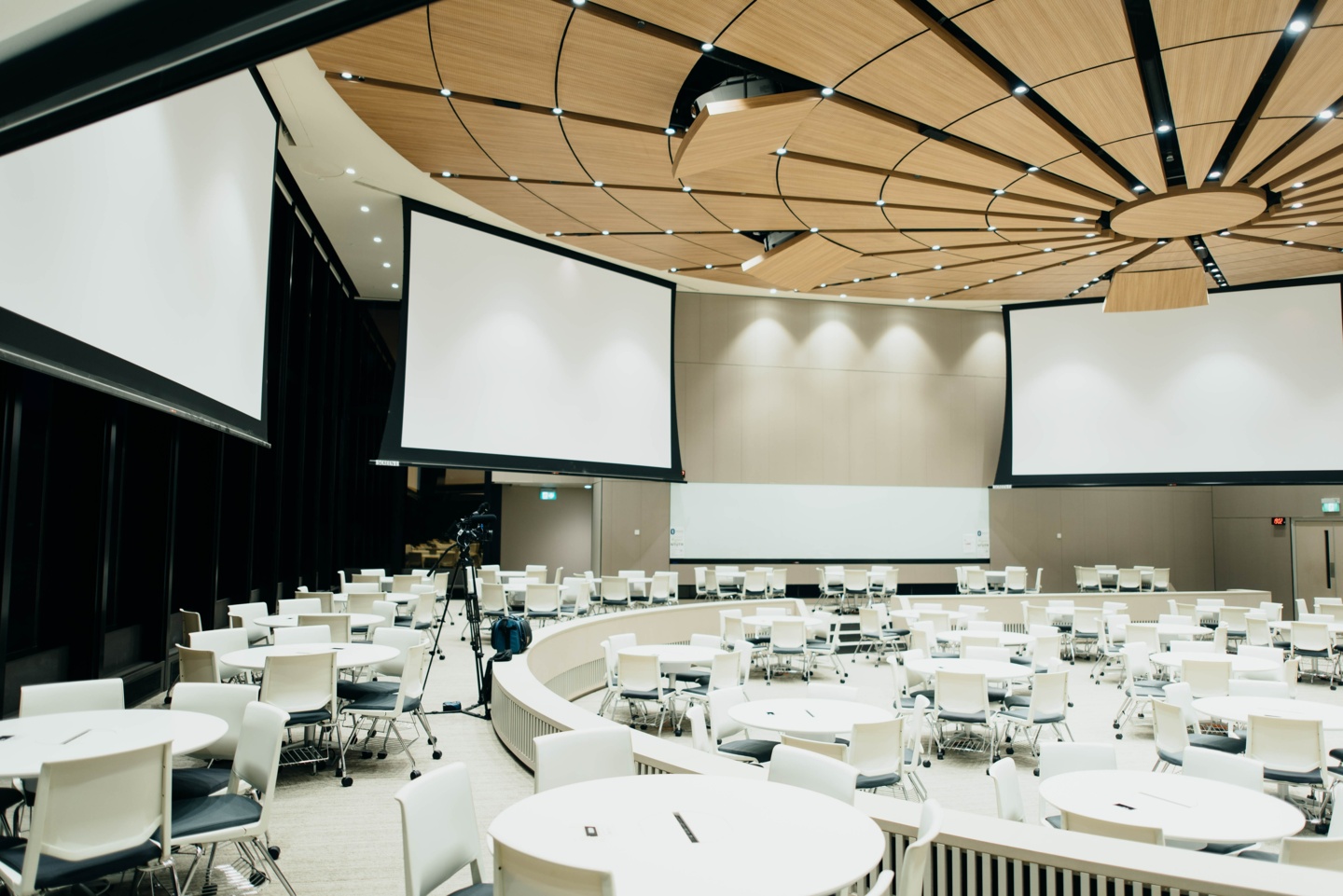
MICE stands for Meetings, Incentives, Conferences, and Exhibitions. Understanding the MICE full form in hotel management is the first step toward building a competitive event offer: unlike regular leisure stays, MICE usually involves larger groups and more detailed planning, with hotels needing to provide not only rooms, but also meeting spaces, catering, event support, and other services that help the event run smoothly.
MICE meaning in hospitality goes deeper than the acronym. MICE is important because it brings valuable business and helps fill rooms beyond typical leisure travel. These events often lead to higher spending on accommodation, food, conference facilities, and extra services, and they can also bring steady demand during weekdays and slower seasons. For hotels, a strong MICE offering is a practical way to increase revenue, attract corporate clients, and stay competitive in a changing market.
For hotels, this matters because MICE brings exactly the kind of demand that supports stronger year-round performance: group bookings, weekday occupancy, food and beverage revenue, meeting room rentals, and higher-value corporate stays. GBTA adds that European business travel spending is projected to reach €389.9 billion in 2026, up 8.2% from 2025, with seminars, training sessions, conventions, conferences, and internal meetings listed among the main reasons people travel for work.
Together, these findings show the importance of MICE in hospitality industry. MICE remains one of the most important demand engines for European hospitality, especially for urban hotels, conference properties, and destinations that rely on international business visitors.
Things you should know about MICE
Recent data shows that MICE is not just a supporting segment in hospitality, but a growing source of revenue across Europe. Rising business travel spending, higher guest spend, and strong demand for meetings and events all highlight what is MICE becoming as a strategic priority for hotels and venues. MICE meaning in tourism plays a role here: business events bring international visitors, stimulate local economies, and position destinations as credible hubs for global exchange.
European spending on MICE is increasing
Spending tied to the MICE industry in Europe is growing. Recent research points to clear momentum. GBTA's 2025 Business Travel Index showed that Western Europe reached 103% of its 2019 business travel spending level in 2024. The MICE meaning in hospitality is clearly reflected in these numbers: business travel and event activity drive increased demand for hotel rooms, meeting spaces, and corporate services across Europe.
The exhibitions segment shows the same trend. Research from UFI and Oxford Economics reported that exhibitions in Europe generated €107.7 billion in direct spending in 2024, highlighting the strong impact of business events on the wider hospitality market. For properties, this often means higher demand for conference, stronger weekday occupancy, event facilities, and more revenue from food, beverages, and other guest services.
Business event travelers typically spend more than leisure tourists
MICE hospitality meaning becomes especially clear when looking at guest spending patterns. MICE travelers typically spend more than leisure travelers because their trips often include more than just accommodation. Business events usually involve meeting packages, conference room bookings, catering, transportation, and other services arranged through the hotel or venue. Many of these guests also travel in groups, which increases overall spending and creates more opportunities for hotels to sell add-on services.
For the hospitality industry, MICE is especially valuable. The MICE full form in hotel revenue extends beyond room bookings. It encompasses food and beverage, business support services, and event facilities. The importance of MICE tourism is especially evident when MICE demand also helps hotels fill rooms on weekdays.
A Large Share of Business Travel Is Driven by MICE
To understand what is MICE in the context of business travel, it helps to look at the numbers. In GBTA's latest outlook, travel buyers said that 20% of their company's 2025 business trips are expected to be for internal company meetings, while another 16% are expected to be for conferences, industry events, or trade shows. This is exactly what MICE stands for in practice: a significant, measurable share of travel that hotels can actively target and plan for.
The MICE meaning in tourism is reinforced by these figures: business events attract consistent, high-value travelers to destinations across Europe, and MICE hospitality translates directly into revenue for hotels and venues. For hotels and venues, those numbers matter because MICE travelers usually generate more demand than just room bookings. They also create business for meeting spaces, catering, event services, and other on-property revenue streams, creating a more stable source of revenue throughout the year.
MICE industry trends in 2026
To understand where the MICE industry is heading, it is important to look at the trends shaping hospitality in 2026. MICE in hotel industry continues to evolve rapidly, and these developments show what hotels need to adapt to meet changing client expectations.
AI is becoming practical, not experimental
AI is no longer just a flashy add-on. It is becoming part of everyday event work, and understanding what is MICE today means understanding how technology is reshaping it. In fact, 91% of surveyed meeting planners said they already use AI in some way during the planning process, showing how quickly it is becoming a factor at every stage of event planning.
For properties and venues AI is being used in ways that directly support operations rather than just adding novelty. The MICE full form in hotel operations now increasingly includes AI-driven venue and vendor sourcing, better analysis of survey and guest data, and more personalized summaries and event recommendations. In other words, AI is becoming useful because it helps teams save time, improve decision-making, and deliver better event experiences with less manual work.
Personalization Is Taking Center Stage in MICE
MICE meaning in hospitality now encompasses a much deeper focus on personalization. Event organizers are seeking ways to make each experience engaging, paying closer attention to what attendees actually want - from the topics they care about to how they prefer to participate. This shift is pushing the industry toward more attendee-led experiences, where content feels more useful, sessions are better targeted, and the overall event journey is easier to connect with on a personal level.
MICE hospitality meaning also includes the rise of smaller and more curated event formats in 2026. Today, many hoteliers now see MICE value in creating more focused experiences that encourage stronger networking, deeper discussions, and higher-quality engagement. For venues and hotels, this means MICE success is no longer just about hosting large groups. It is also about offering flexible spaces, smooth technology, and the ability to support events that feel more tailored, relevant, and memorable for every attendee.
Budgets are growing, but costs are too
Budgets are rising in MICE, but that does not mean planners are under less pressure. The importance of MICE in hospitality industry is mirrored not just in growing event volumes, but in the financial pressure that follows them. Amex GBT's 2026 meetings forecast found that 90% of European-based respondents expected overall meetings and events spending to boost year over year. This indicates continued demand and confidence in the sector. At the same time, that growth comes with a challenge: higher budgets are often used to absorb higher prices rather than to expand event scope freely.
Costs are rising across the market, putting extra pressure on MICE in hotel industry. For event spaces and organizers, success depends not only on winning more business but also on managing budgets carefully, controlling expenses, and showing clear value from every event. This makes cost efficiency a much higher priority across the industry. Teams are looking for smarter ways to plan events, reduce unnecessary spending, and achieve better results with the budgets they already have.
How to attract MICE guests to your hotel
Attracting MICE guests takes more than offering rooms and event space. MICE meaning in hospitality ultimately comes down to showing clear value, supporting smooth planning, and creating an experience that meets the expectations of business travelers and event organizers.
1. Highlight your main strengths clearly
Your website should make your MICE offering easy to understand at first glance. What is MICE if not an opportunity to present your hotel's full event offer clearly and confidently? Potential clients and event planners should not have to search page after page to determine whether your hotel meets their needs. Clear and specific content can help you present your strongest advantages, from flexible event venues and comfortable business stays to catering, stable Wi-Fi, parking, a convenient location, and full support for meetings, conferences, and corporate groups. Adding real photos, room capacities, and example event layouts also makes your offer much easier to evaluate.
Your website should present the benefits of your business in a credible way. Sharing testimonials from business clients and offering a simple inquiry process can help build trust and motivate potential clients to get in touch. It is also useful to highlight how your hotel makes planning easier through fast communication, streamlined booking processes, and digital tools that facilitate coordination. If creating that kind of website feels like a challenge, HotelFriend can help with a smarter approach by building mobile-friendly, visually appealing websites designed to support revenue growth and connect your hotel with the right guests.
2. Use an Integrated Platform to Manage Everything in One Place
Using an all-in-one platform can make MICE management much easier for hotels that want to keep operations organized and efficient. The MICE full form in hotel strategy, such as covering bookings, guest stays, meeting coordination, service requests, and internal communication, works best when managed through one connected system rather than separate tools. This is especially useful for MICE operations, where accommodation and event workflows must work together without delays or confusion.
HotelFriend offers a cloud-based PMS that helps hotels manage bookings, orders, invoices, and employee coordination in a single platform. For properties that work with business events and group stays, this setup can simplify daily processes and give teams better control over guest service and event-related tasks. As a result, hotels can reduce manual work, improve coordination across departments, and create a smoother experience for both staff and MICE guests.
3. Position Your Hotel as a Complete Event Venue
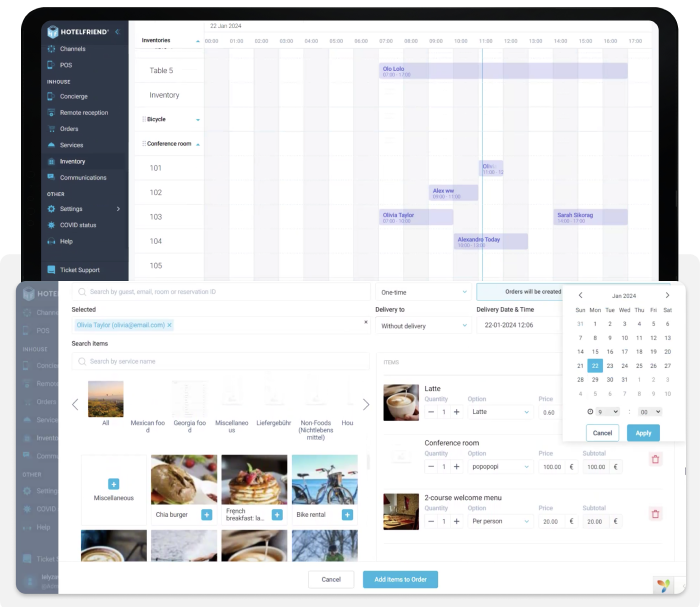
Your hotel should be presented as more than a place to stay overnight. MICE stands for more than meetings alone. It represents a comprehensive ecosystem of business events that hotels can actively support, including workshops and seminars, as well as conferences and exhibitions. For MICE clients, it is important to show that your property can serve as a reliable venue for business and group events. When your website and marketing materials clearly highlight this, potential clients can immediately see that your hotel is suitable not only for accommodation but also for organized events of all kinds.
Event Management Tools, like those offered by HotelFriend, can help hotels strengthen this broader positioning by making it easier to manage different types of events within a single system. Whether the hotel hosts team-building activities, conferences, banquets, workshops, or corporate gatherings, the solution helps streamline operations, simplify coordination, and support a smoother experience for both organizers and guests.
4. Improve the MICE Experience Through Digital Communication
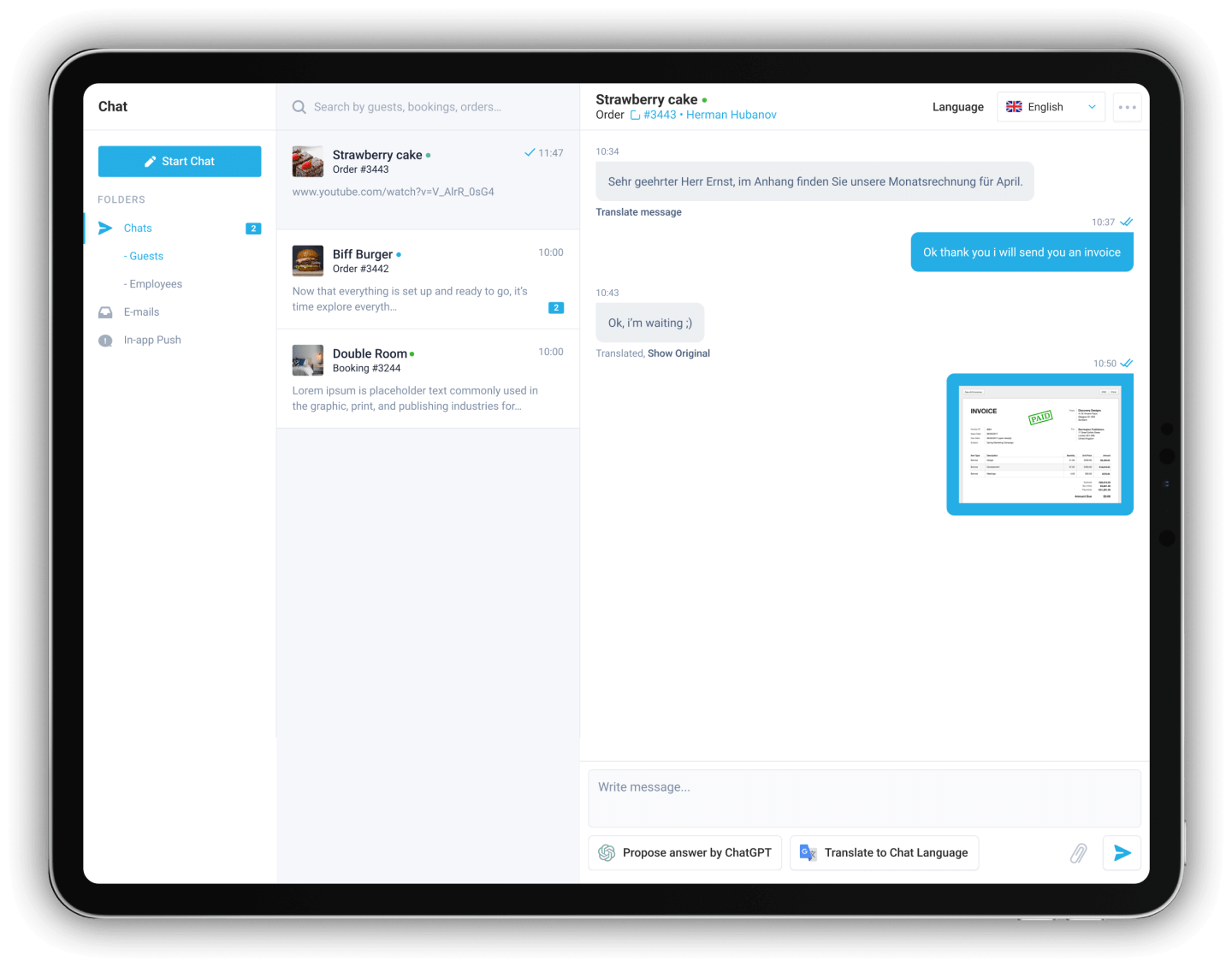
Digital communication has become an important part of the MICE guest experience, especially before arrival and during the event itself. MICE meaning in hospitality includes the expectation of fast answers, simple service requests, and clear communication without unnecessary delays. When a hotel offers convenient digital contact options, such as mobile messaging, it becomes easier to support attendees, respond to questions quickly, and create a smoother experience from the first interaction to the end of the stay.
Tools like Live Chat and Concierge App can also help hotels manage guest requests more efficiently. Using these solutions, guests can contact the hotel in real time, ask staff about bookings and services, and receive prompt assistance. This advances guest communication, reduces response times, and creates a smoother experience for MICE travelers who appreciate clarity and easy access to support.
5. Streamline MICE Arrivals with Digital Check-In Tools

Digital check-in software helps make business stays more convenient. This is particularly critical in MICE tourism. Clients traveling globally for conferences and exhibitions expect an organized check-in experience without long waits at the front desk. A more digital approach helps hotels reduce delays, improve first impressions, and create a more convenient arrival experience for business travelers.
Platforms like HotelFriend can help hotels streamline check-in workflows and handle arrivals more efficiently. By simplifying the arrival process, hotels can ease staff pressure, improve coordination, and provide guests with a smoother start to their stay.
6. Work with a Reliable Hospitality Software Partner
Choosing the right software is not only about features. It is also about knowing that your hotel has dependable support behind the system. MICE in hotel industry rewards those who invest in the right tools and back them with strong onboarding, clear processes, and responsive assistance - especially for MICE operations, where timing, coordination, and guest expectations matter most.
A reliable software partner like HotelFriend can make a real difference here. With structured processes, dedicated onboarding, and responsive assistance, hotels can get more out of the system as they grow. For properties focused on business guests and events, that kind of backing builds confidence, eases day-to-day operational pressure, and lays a solid groundwork for sustainable long-term success.
7. Present Your Hotel as a Modern, Fully Connected MICE Venue
To stand out in the MICE market, hotels need to demonstrate they can offer more than just rooms and event space. The importance of MICE hotel industry for destinations and individual properties is undeniable because business events attract high-value international travelers and generate demand that leisure travel alone cannot replicate. Modern business clients expect a smooth, well-organized experience where accommodation, event planning, guest communication, and daily operations work together without friction.
This is why an integrated approach matters. Instead of relying on separate tools for bookings, event coordination, communication, and operations, hotels can benefit from using one connected system. HotelFriend promotes this kind of setup across its PMS and event solutions, helping properties manage different parts of the guest and event journey in one place. For hotels targeting MICE business, this can improve internal coordination, reduce manual work, and enhance the professional experience for both organizers and attendees.

8. Support better teamwork
Task management software is especially important in MICE operations, where hotels need to coordinate many moving parts simultaneously. Understanding what is MICE in operational terms means recognizing that group arrivals, meeting room preparation, catering, housekeeping, technical support, and guest requests must all stay aligned for an event to run smoothly. Instead of relying on scattered notes or manual follow-ups, teams can manage tasks in one place, track progress in real time, assign responsibilities, and make sure nothing is overlooked.
For hotels serving MICE guests, Task Management Software can significantly improve efficiency and service quality. It helps staff coordinate housekeeping and room setup, organize event-related responsibilities, and keep staff aligned during seminars, conferences, and corporate stays. With better task visibility, hotels can reduce confusion, improve internal coordination, and deliver a smoother experience for both staff and business guests.
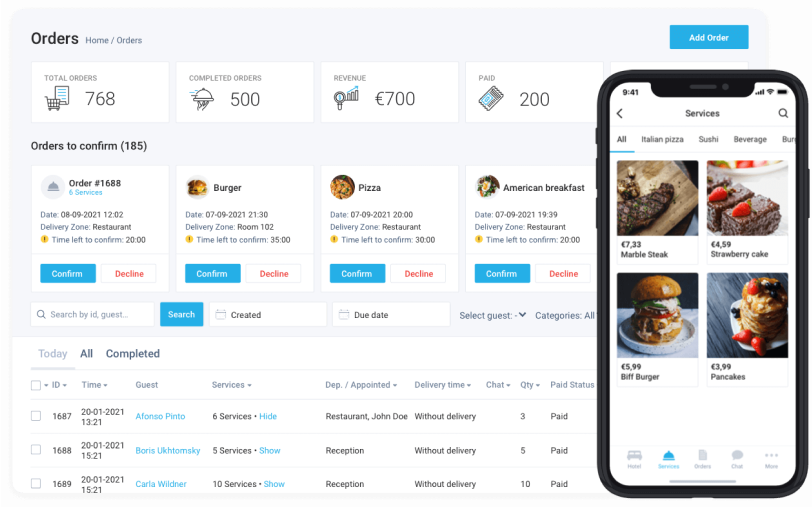
9. Optimize Your MICE Operations with an Order Management System
An order management system can play an important role in MICE operations, as business events often involve numerous service requests that must be handled quickly and accurately. These may include catering orders, conference room services, equipment requests, guest add-ons, and other event-related needs. When all orders are managed through a single system, hotels can track requests more clearly, avoid missed details, and ensure every department knows what needs to be delivered and when.
For hotels working with MICE guests, this creates a more organized and reliable service process. An Order Management Software helps staff coordinate food and beverage services, room setup, special requests, and other event-related operations without relying on scattered communication. As a result, hotels can improve response times, reduce operational confusion, and provide a smoother experience for event organizers and business travelers.
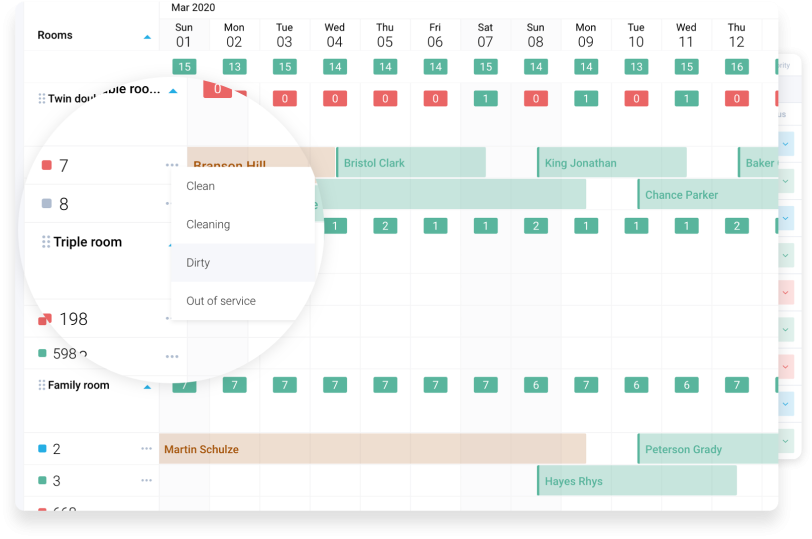
10. Strengthen MICE Operations Through Better Housekeeping
Housekeeping plays a critical role in MICE operations because business events often involve tight schedules and high service expectations. Meeting rooms, areas, and shared spaces need to be prepared on time and maintained throughout the event. When housekeeping is well organized, hotels can respond more quickly to changing needs, support smoother arrivals, and create a more professional experience for business guests.
For hotels serving MICE guests, HotelFriend can help streamline housekeeping and make it more responsive. By supporting room status tracking, clearer task coordination, and smoother communication between teams, the platform helps staff stay aligned during conferences, corporate events, and busy group arrivals. This makes it easier to prepare rooms on time, respond to last-minute changes, and maintain a high service standard.
Top European Markets for MICE
The most attractive European MICE markets are currently concentrated in the UK, Spain, the Netherlands, Portugal, France, Germany, Italy, the Czech Republic, and Ireland. Cvent's 2025 Europe rankings placed London, Barcelona, Madrid, Amsterdam, Lisbon, Paris, Berlin, Rome, Prague, and Dublin in the top 10 meeting destinations, based on 2024 sourcing activity. That makes Western and Central Europe the strongest region for hotels and venues targeting international meetings and events.
Among these markets, the UK and Spain stand out. London ranked first in Europe, while Barcelona and Madrid took second and third, underscoring the appeal of these destinations for conferences, corporate events, and business travel. The Netherlands and Portugal also continue to perform well, with Amsterdam and Lisbon strengthening their position as high-demand MICE markets.
The broader market picture also supports Europe's strength in MICE. ICCA-related 2025 reporting says Europe hosted 56% of all recorded association meetings, while UFI and Oxford Economics reported that exhibitions in Europe generated €107.7 billion in direct spending in 2024. Together, these figures show why Europe remains one of the most attractive regions in the world for MICE, especially for hospitality businesses that want to grow through meetings, exhibitions, and corporate event demand.
Wrapping Up
MICE meaning in hospitality represents an approach to business guests that demands coordinated operations, flexible infrastructure, and seamless service. Recognizing the importance of MICE in hospitality industry means seeing it as a long-term channel that supports occupancy, weekday demand, and stronger guest spending. The MICE industry continues to grow across Europe, and MICE meaning in tourism extends well beyond individual properties. Business events bring international visitors and position destinations as credible hubs for global exchange.
For hotels ready to act, the MICE full form in hotel strategy, such as covering meeting room readiness, digital check-in, and integrated operations, will define which properties capture the most business, and the importance of MICE tourism will only grow as the market evolves. Ultimately, MICE in hotel industry rewards those who treat it with the same strategic focus applied to any core revenue stream, because MICE meaning in hospitality comes down to one thing: being fully prepared to deliver exceptional experiences for business guests, every time.