
Online reviews have become one of the biggest levers hotels have over booking decisions and pricing power - a hotel's reputation now shapes revenue almost as directly as its rates or location do. But with dozens of tools claiming to manage that reputation, picking the right one for your property is where many hoteliers get stuck. Below, we compare relevant options for 2026 and use one published HotelFriend client case to show where operational automation fits.
The Legislative Landscape for Hotel Reputation in the DACH Region
Guest review management in Germany, Austria, and Switzerland is not only a marketing activity. Hotels also need to consider rules on misleading commercial practices, review authenticity, personal data, and electronic communications. The exact requirements depend on how reviews are collected, displayed, incentivized, and used.
How Reputation Regulation Differs Across Germany, Austria, and Switzerland
Germany and Austria apply EU-derived consumer-protection rules through their own national laws. Switzerland is not an EU member and follows a separate legal framework, although the EU GDPR may still apply in specific cross-border situations.
Germany: Transparency requirements around review authenticity
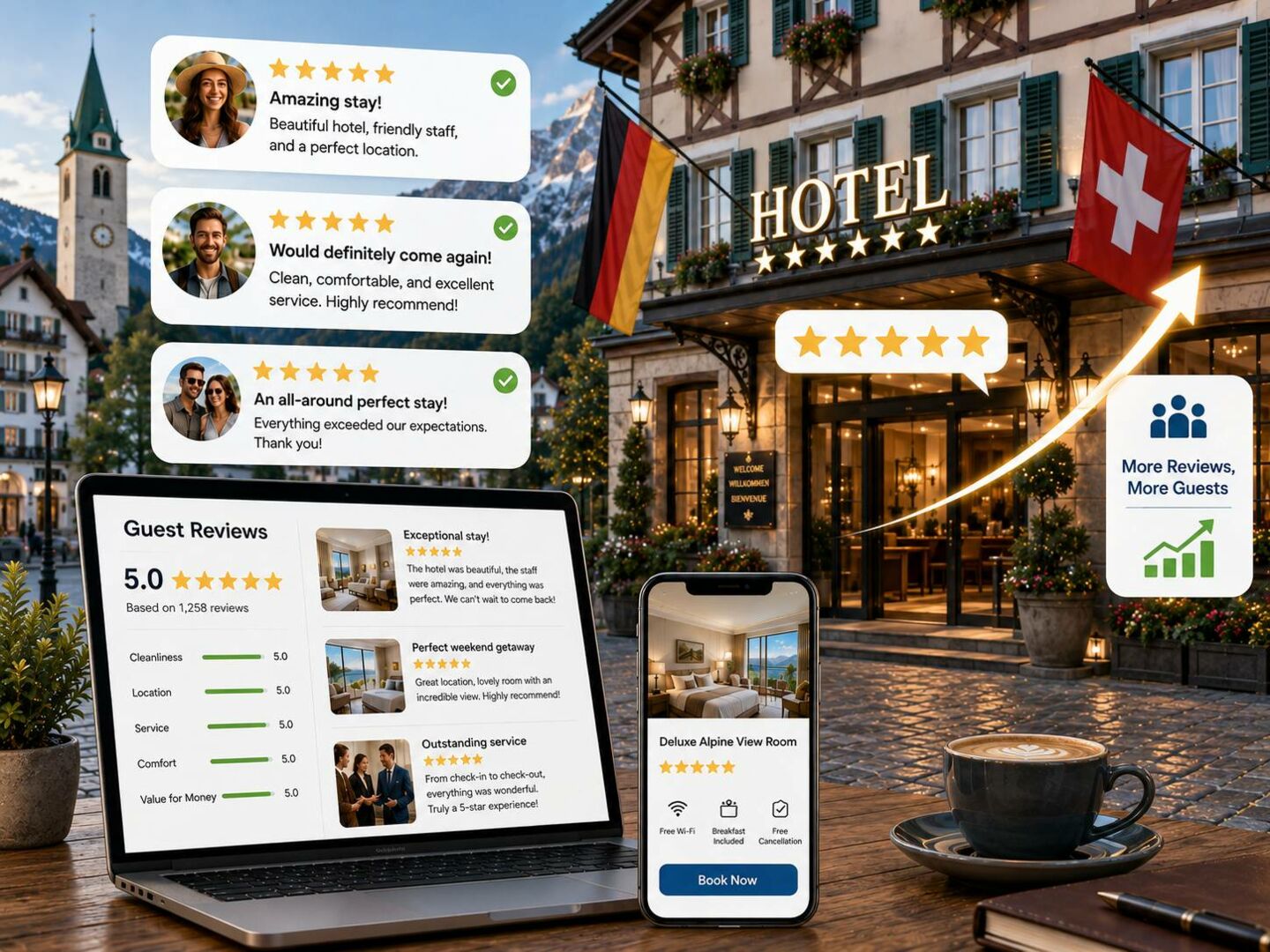
German unfair-competition law requires businesses to be accurate about whether and how they verify that published reviews come from consumers who actually used or purchased the service.
Submitting or commissioning false reviews, or misrepresenting reviews in order to promote a service, is prohibited.
This does not mean that every review must be linked publicly to a verified stay. It means that any claim about authenticity or verification must match the process actually used.
Hotels displaying ratings or testimonials should document their collection and moderation process and show review totals, dates, and context clearly enough to avoid misleading users.
Austria: Similar EU-derived rules under Austrian law
Austria applies comparable EU-derived rules through its own Unfair Competition Act. Fake reviews and misleading claims about verification are prohibited.
Hotels may have remedies when a review contains demonstrably false factual allegations or unlawful content. However, criticism and subjective opinion are not automatically removable merely because they are negative.
The EU Digital Services Act provides notice-and-action and complaint mechanisms for online platforms. It does not guarantee removal of an unfavorable review; the platform must assess the report under applicable law and its terms.
Switzerland: A separate legal framework
Switzerland follows its own Federal Act against Unfair Competition and Federal Act on Data Protection. Misleading commercial practices and fabricated endorsements can still create legal risk.
Hotel groups should assess Swiss requirements separately, but they should not assume that Swiss and EU obligations are completely unrelated. The GDPR can apply in certain cross-border circumstances.
Cross-border compliance: Guest feedback collection and data protection
Automated feedback requests involve personal data and electronic communications. Hotels should not assume that every post-stay survey email is automatically permitted throughout the DACH region.
The applicable rules can depend on the country, the existing customer relationship, consent, the legal basis for processing, and whether the message also promotes future stays or services.
In Switzerland, the default rule for email advertising is prior consent, subject to a limited existing-customer exception for a business's own similar services. A clear sender identity and a simple opt-out are required.
When evaluating software, look for consent and suppression controls, configurable sending rules, unsubscribe handling, audit trails, data-retention settings, role-based access, and clear processor agreements.
This overview is not legal advice. Hotels should ask qualified local counsel to review the actual process used to verify reviews, send survey emails, handle personal data, and contest unlawful content.
Why Reputation Management Matters More Than Ever
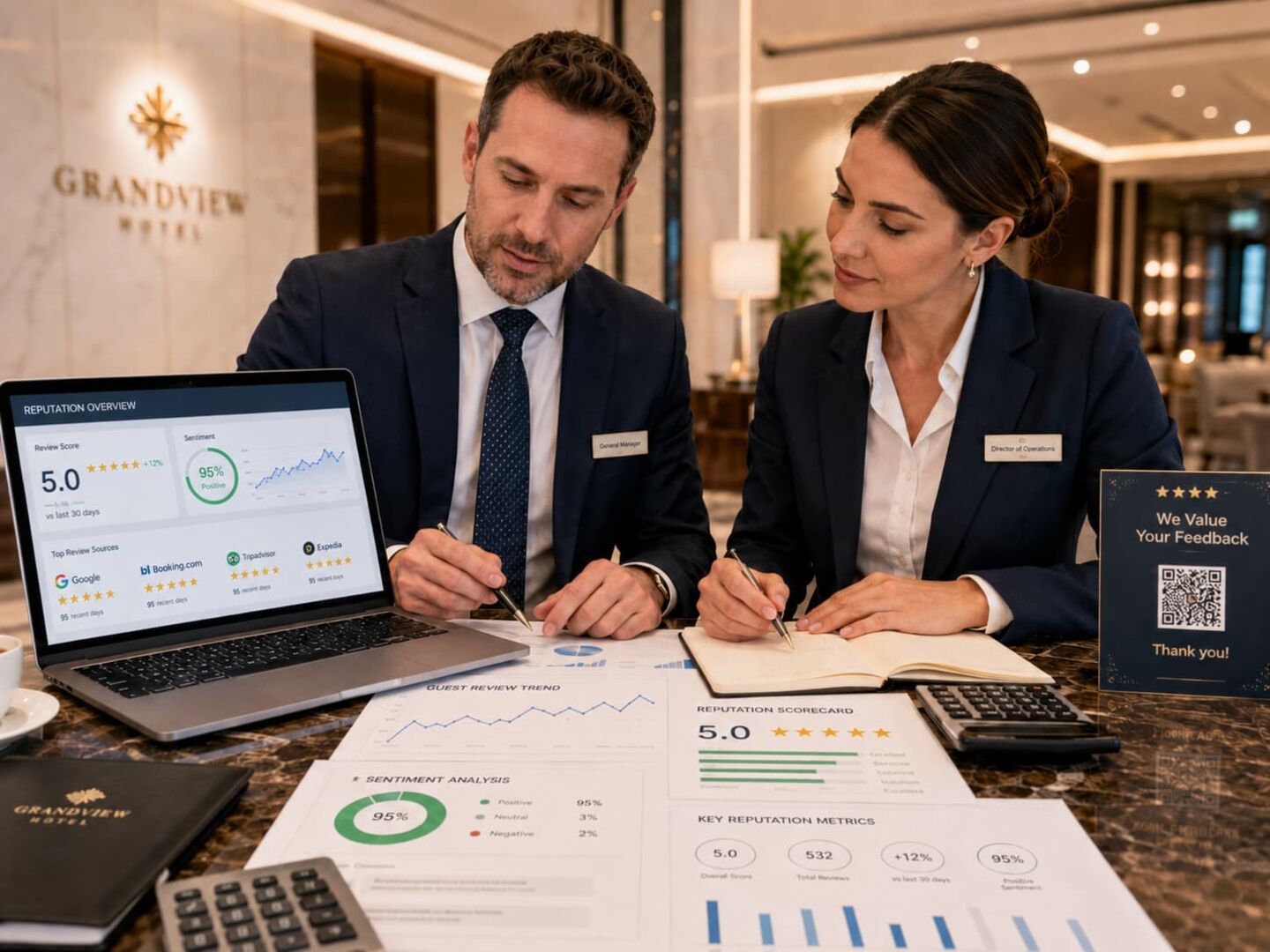
Online reviews are not just feedback anymore. They are one of the first things a guest sees before they even think about booking a room. A single bad review can push a traveler to choose a different hotel, and a string of good ones can convince someone to pay more for the same type of room. That’s why hotels today can’t afford to ignore what people are saying about them online.
Impact on Bookings & ADR
Travelers often consult reviews before they call the front desk or fill out a booking form. That means many guests have already formed an impression of the property before the hotel can speak with them directly. That means your reputation is doing a lot of selling before you even get the chance to.
This is how reviews actually influence bookings and revenue:
- ● More clicks. Higher ratings make your listing more attractive than the competition.
- ● Higher conversion. Reviews help guests feel comfortable when they land on your page, making them more likely to book.
- ● Room to charge more. Confident guests are willing to pay a higher Average Daily Rate for the same type of room.
- ● Stronger booking confidence. A recent, credible review profile can reduce uncertainty during the booking decision.
- ● Weak reviews cost you quietly. Guests who are unsure often just leave, without ever saying why.
- ● Perception beats reality. A neglected online reputation can hurt bookings even when your service is excellent.
In short, reviews do not just reflect past guests. They actively shape how many new guests you get and how much they are willing to pay.
In short, reviews do not just reflect past guests. They actively shape how many new guests you get and how much they are willing to pay.
Review Sites That Move the Needle
Not every review site carries the same weight. Some platforms have a much bigger effect on how travelers decide where to stay. Sites like Google, TripAdvisor, and Booking.com tend to shape opinions the most, since they show up early in searches and are trusted by a wide range of travelers. Google reviews in particular affect visibility, since they can influence how a hotel appears in local search results. Focusing your attention on these key platforms, instead of trying to manage every review site at once, is usually the smarter way to build a strong reputation.
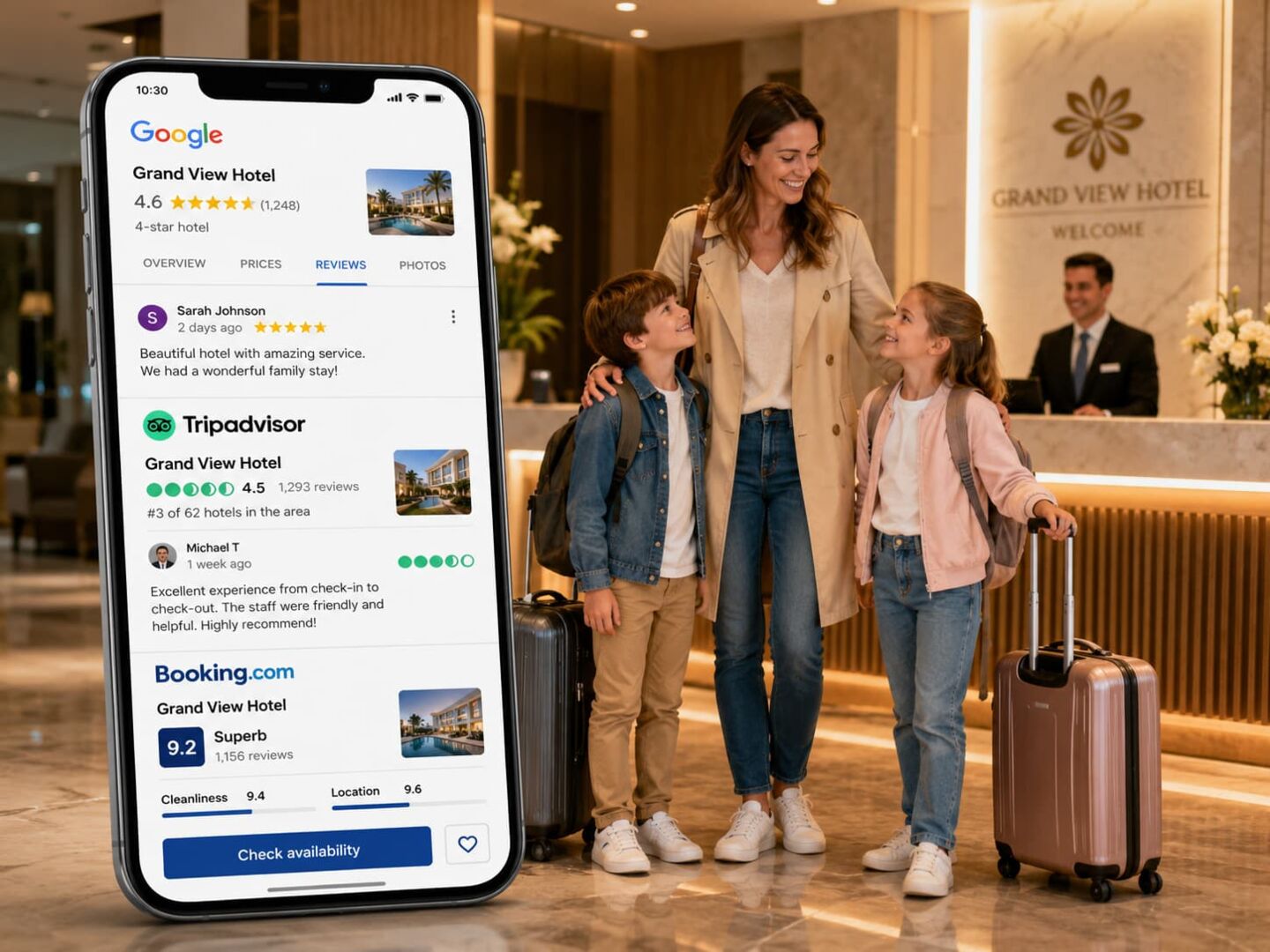
How to Compare Hotel Reputation Management Software
Picking a reputation management tool is not something to rush into. Every platform looks similar on the surface, but the features underneath can be very different, and choosing the wrong one can mean wasted time, missed reviews, or paying for tools you will never use. Comparing features side by side helps you see what each platform actually does well, instead of relying on marketing claims alone.
The right tool can support faster responses, sentiment and topic analysis, and a more consistent reputation-management workflow. A careful comparison helps hotels avoid paying for features they will not use or discovering important gaps after implementation.
How Reputation Management Tools Compare
Online reputation software does not always work in the same way. Some companies have software solutions that enable users to collect reviews into a single place, so it is convenient for businesses to keep up with the opinions of their clients, while others use even more advanced software products that incorporate an AI-based response system, which is capable of conducting sentiment analysis, as well as other features for achieving full preparedness for the clients' needs in the hospitality sector.
- ● Review aggregation: a reliable tool gathers review data from platforms like Google, TripAdvisor, and Booking.com into one place, enabling prompt and consistent feedback monitoring.
- ● Response speed and automation: many platforms using automated replies to help companies address negative reviews within hours instead of days.
- ● Reporting and benchmarking: Many platforms let you compare your hotel's reputation against competitors, not just track your own scores over time.
- ● Integration with daily operations: Some tools are designed only for reviews; others, like full property management systems, include reputation monitoring on the same platform you already use for bookings and guest service.
HotelFriend can connect guest communication and feedback-request emails with reservation data. However, its official product pages reviewed for this article do not present cross-platform review aggregation and direct review responses as core functions, so hotels that need those capabilities should confirm a specialist integration.
The right fit really depends on your hotel size and how hands-on you want to be. A small independent property may just need a simple aggregation and alert tool, but a larger group may want deep analytics and competitor benchmarking built in.
Top Picks for 2026
With so many platforms on the market, it helps to see them side by side. The table below breaks down five of the strongest hotel reputation management tools for 2026, along with their key features and who each one suits best.
|
Solution |
Key Reputation Management Features |
Best For |
|---|---|---|
|
HotelFriend |
|
Hotels that want feedback requests connected with daily property operations and can add a specialist reputation tool if needed |
|
TrustYou |
|
Hotels seeking detailed analysis of guest opinions and satisfaction trends |
|
ReviewPro |
|
Hotels that want to compare their reputation performance with competitors |
|
Revinate |
|
Hotels that want to connect guest reviews with marketing and retention strategies |
|
Customer Alliance |
|
Hotels focused on collecting more guest feedback and increasing review volume |
Information is taken from open sources. Valid as of August 2026
Pricing Snapshot
Public pricing is limited and can change, so hotels should request a written quote covering setup, integrations, survey modules, multi-property reporting, and add-ons.
- ● HotelFriend FLEX is advertised from €156 per month; the final cost depends on the selected modules and setup.
- ● Revinate's public Guest Feedback plan page lists Reputation at $125 per property per month. Post-stay surveys are listed at another $125 per property per month and require the Reputation subscription; setup and optional add-on fees are also listed.
- ● TrustYou, ReviewPro, and Customer Alliance use demo or quote-based sales flows on the official pages reviewed for this comparison.
HotelFriend's strength in this comparison is operational context. Its PMS can connect reservation data, guest profiles, communication, and automated feedback-request emails. That is useful for timing a request and investigating a complaint, but it should not be described as a complete replacement for a specialist platform unless the required review sources, aggregation, response tools, and integrations are confirmed in the selected package.
Case in Point: Peter's Resort
- ● The challenge. Peter's Resort managed bookings manually across disconnected processes, creating extra administrative work and limiting visibility across reservations.
- ● The solution. The property implemented HotelFriend's PMS, Booking Engine, and Channel Manager to centralize reservation and guest data and automate distribution.
- ● The result. HotelFriend's published case study reports a 95% improvement in workflow efficiency and a 27% increase in online bookings. The case does not report review-response times, review aggregation, or reputation-score improvements. Its relevance here is indirect: accurate stay and guest records provide a better foundation for correctly timed communication and for investigating a complaint.
Guest Feedback Collection Tools
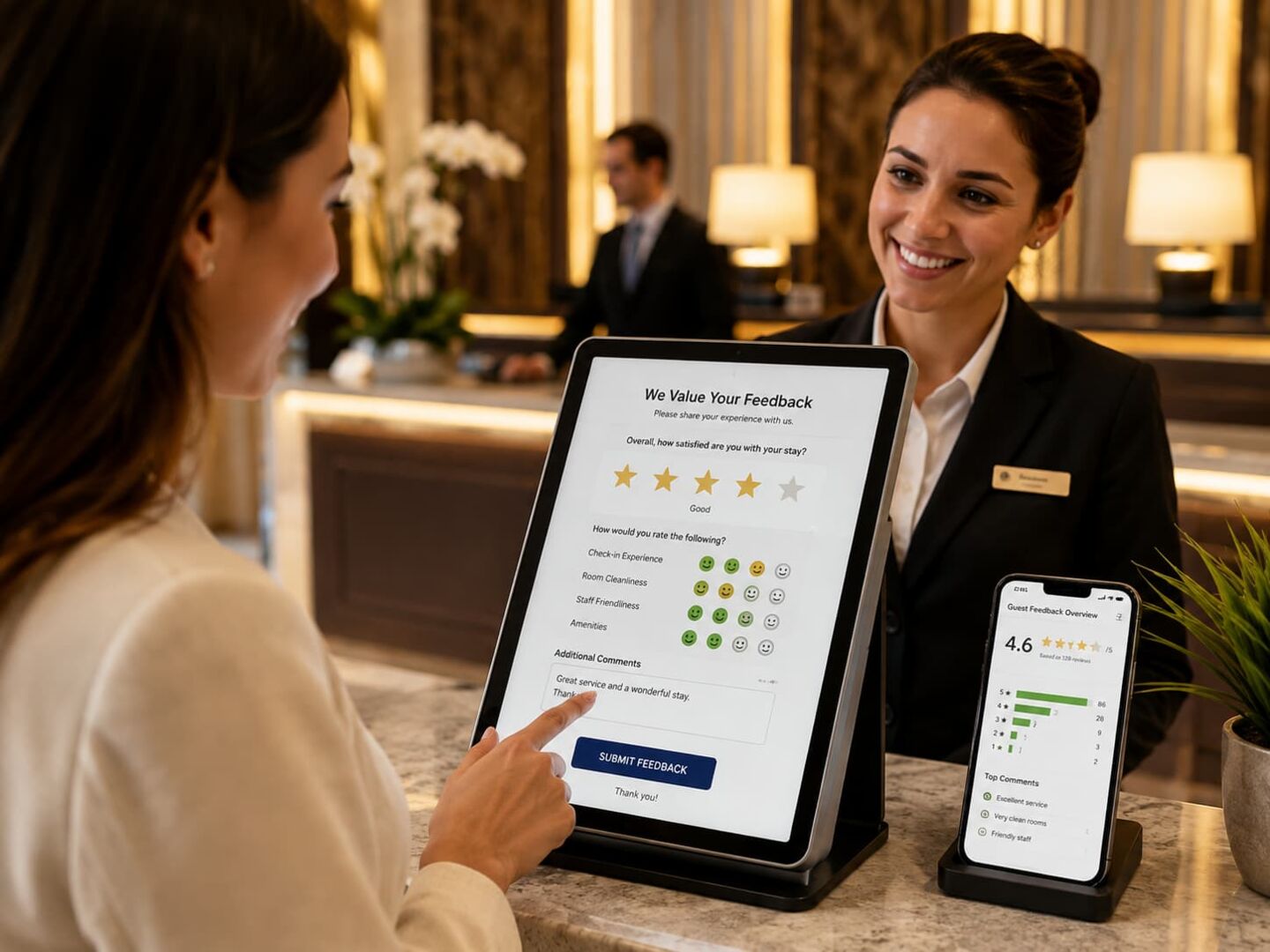
Reviews are only half the battle. The majority of hotels need a way to request feedback directly from guests before they can leave feedback publicly, either during the stay or right after checkout. That’s where tools for collecting feedback come in, and choosing the right one can be the difference between a handful of scattered comments and a steady flow of useful, actionable input.
How to Compare Guest Feedback Software for Hotels
Feedback software helps hotels reach out to guests at the right moment, usually through email, SMS, or a quick survey sent after checkout. The goal is simple: catch problems before they turn into public one-star reviews, and capture praise while it is still fresh in the guest's mind.
Most feedback platforms include a similar set of building blocks:
- ● Survey builder. A simple way to create short, guest-friendly surveys with rating scales and optional comment fields.
- ● Automated triggers. Requests are sent out automatically at set moments, most often right after checkout, so no one has to remember to ask.
- ● Multi-channel delivery. Surveys usually go out by email or SMS, and sometimes through a QR code or in-app prompt, so guests can respond wherever is easiest for them.
- ● Alert and routing system. Negative responses can be flagged and sent straight to a manager, so problems get handled before the guest leaves a public review.
- ● Reporting dashboard. Feedback is grouped into themes and trends, so patterns like slow check-in or noisy rooms become easy to spot over time.
A practical approach is to test feedback timing rather than assume that one schedule works for every hotel. In-stay requests are useful for service recovery because the hotel can still act, while post-stay surveys can assess the complete experience. Keep the survey short, make it mobile-friendly, and measure completion and response quality by channel.
Together, these pieces turn guest feedback from something scattered and easy to miss into a steady, organized stream of information the hotel can actually act on.
Small Hotel Feedback Software
What works for a large chain does not always work for a small property, and feedback software is a good example of that. Large hotel groups often need complex systems with layers of settings, multiple user roles, and detailed reporting across many properties. A small hotel usually needs the opposite: something simple that just works right out of the box.
Here is what tends to set small hotel needs apart:
|
Priority |
What to Look For |
Why It Matters |
|---|---|---|
|
Simplicity |
|
Small hotels benefit more from tools that work immediately than from platforms requiring extensive configuration. |
|
Low Manual Effort |
|
Staff often handle several responsibilities, so the software should not create additional routine tasks. |
|
Quick Problem Visibility |
|
Important guest issues should be easy to identify without reviewing complex reports. |
|
Flexible Pricing |
|
Small properties should not have to pay for tools designed for large hotel groups. |
|
Right-Sized Features |
|
A lightweight platform is often more useful than a feature-heavy system the team cannot fully use. |
Combined Reputation + Feedback Solutions
Reviews and feedback are two sides of the same coin, but many hotels use different tools to manage them: one tool for private feedback after checkout and another for public reviews on Google or TripAdvisor, with little connection between the two. This causes real problems: if a guest flags a slow check-in privately and staff don't link it to the same guest's two-star review a week later, they end up reacting to the public complaint without knowing the fuller story. Switching between dashboards adds friction, and those delays pile up for teams already juggling front desk duties and guest requests.
Why Integration Wins
You have feedback collection and reputation management on the same platform, so it’s a lot more connected. If a problem is reported in a guest survey, staff can connect it with the relevant stay and resolution history. Linking it to a later public review is only possible when the platform, source data, privacy rules, and matching method support that connection.
Why this matters:
- ● One view of the guest journey. Staff can see private feedback and public reviews together, rather than having to piece the story together from two different systems.
- ● Faster problem solving. If a guest already flagged an issue privately, staff can follow up before it turns into a public complaint, since both channels are visible in one place.
- ● Less manual work. There is no need to export data from one tool and import it into another just to get a full picture of guest sentiment.
- ● Smarter reporting. Trends become easier to spot when private feedback and public reviews are analyzed together, rather than in separate reports that never quite line up.
- ● Lower cost and simpler training. Managing one platform instead of two usually means a lower total cost and less time spent training staff on multiple systems.
This type of integration is especially useful for smaller hotels with limited staff. It can make the difference between reputation management becoming a consistent daily habit and remaining a task that is repeatedly postponed.
This type of integration is especially useful for smaller hotels with limited staff. It can make the difference between reputation management becoming a consistent daily habit and remaining a task that is repeatedly postponed.
Best All-in-One Tools
Instead of piecing together two separate systems, these platforms bring feedback collection and reputation management into a single tool. The table below lays out five strong all-in-one options for 2026, along with what each one offers and who it fits best.
|
Vendor |
Feedback and Reputation Management Features |
Best For |
|---|---|---|
|
HotelFriend |
|
Hotels that want feedback requests tied to daily operations and can integrate a specialist tool for public-review management |
|
Revinate |
|
Hotels that want to connect guest feedback with marketing and retention |
|
TrustYou |
|
Hotels seeking to combine public reviews with direct guest survey data |
|
ReviewPro |
|
Hotels that want a complete view of guest sentiment and competitor performance |
|
Customer Alliance |
|
Hotels that want surveys and review generation to work as one process |
Information is taken from open sources. Valid as of August 2026
Acting on Feedback at Scale
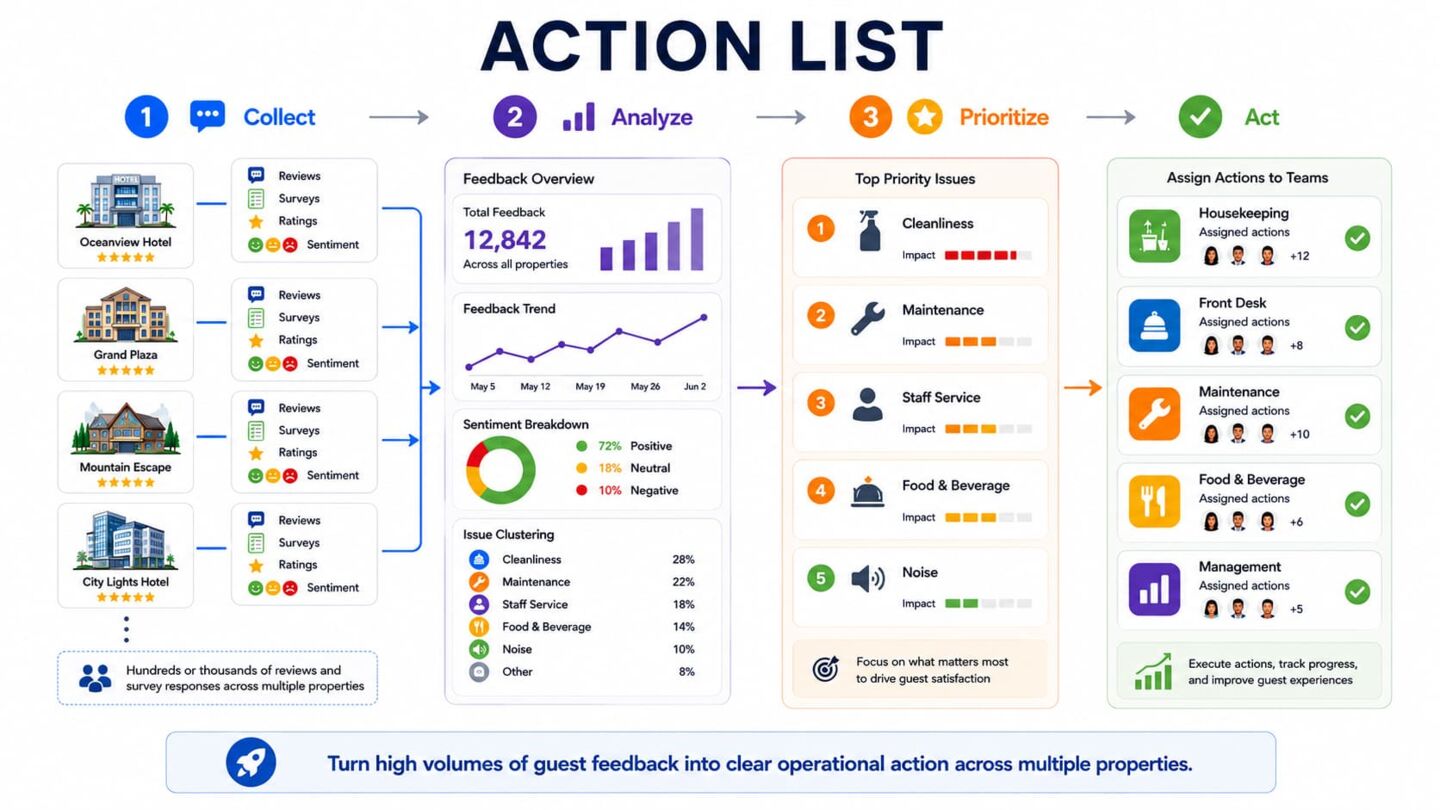
Collecting feedback is easy compared to what comes next. Once a hotel has hundreds or thousands of reviews and survey responses piling up, the real challenge becomes making sense of it all and actually doing something with it. This is where scale changes the game, since what works for reading ten reviews a week falls apart when you are dealing with ten a day across multiple properties.
Sentiment Analysis & Trend Spotting
You can go through every review one by one for a small property, but for large volume it becomes impossible. Hoteliers can see what matters without having to read through everything themselves, as sentiment analysis tools do this by automatically scanning feedback and grouping it into patterns. Things this makes possible:
- ● Spotting recurring issues. If dozens of guests mention slow check-in in the same month, that pattern jumps out versus getting lost in hundreds of other comments.
- ● Tracking sentiment over time. Hotels can see whether guest satisfaction is improving or slipping, rather than only reacting to one review at a time.
- ● Comparing across properties. For hotel groups, sentiment analysis makes it possible to see which locations are struggling with the same issue, so fixes can be shared instead of solved one property at a time.
- ● Prioritizing what to fix first. As trends begin to emerge, it becomes simpler to decide whether to concentrate on staff training, maintenance, or an entirely different area, depending on what guests are most actively discussing.
Without that kind of pattern spotting, feedback at scale just becomes noise. It takes that same data and makes a clear list of what to fix next.
Closing the Loop with Guests
Spotting a problem is only useful if something happens after that. Closing the loop means actually responding to feedback, not just collecting it, and this step is often where hotels fall short as volume increases. A few habits make this easier to manage at scale:
- ● Timely responses. Whether it is a public review or a private survey, a fast reply shows guests they were actually heard, not just logged into a system.
- ● Routing to the right person. Complaints about housekeeping should reach housekeeping, not sit in a general inbox waiting for someone to notice.
- ● Following up after a fix. When a returning guest's past complaint has been addressed, a quick note letting them know can turn a frustrated guest into a loyal one.
- ● Sharing feedback internally. Trends spotted through sentiment analysis should reach the teams who can actually act on them, not just sit in a dashboard that only managers check.
Scaled, closing the loop turns feedback from a passive record of complaints into an active part of how the hotel gets better. When guests see their input lead to actual change, they take notice, and that’s often what turns a one-time visitor into a returning guest.
Conclusion
The best platform is the one that covers the hotel's priority review sources, fits its legal and operational requirements, and turns feedback into accountable action. Specialist tools are the stronger choice for cross-channel review management and benchmarking. HotelFriend provides operational context and automated guest communication; where broader review management is required, hotels should confirm a supported specialist integration rather than assume that one system does everything.
Sources Referenced
- ● German Act against Unfair Competition: https://www.gesetze-im-internet.de/uwg_2004/BJNR141400004.html
- ● Austrian Unfair Competition Act: https://ris.bka.gv.at/NormDokument.wxe?Abfrage=Bundesnormen&Anlage=1&Gesetzesnummer=10002665
- ● Swiss FDPIC, advertising and marketing guidance: https://www.edoeb.admin.ch/en/advertising-marketing
- ● European Commission, user rights under the Digital Services Act: https://digital-strategy.ec.europa.eu/en/factpages/user-rights-under-digital-services-act
- ● TrustYou Customer Experience Platform: https://www.trustyou.com/products/customer_experience_platform/
- ● Shiji ReviewPro Reputation: https://www.shijigroup.com/reviewpro-reputation
- ● Revinate Guest Feedback: https://www.revinate.com/hotel-software/revinate-guest-feedback/
- ● Revinate Guest Feedback plans: https://www.revinate.com/plans-guest-feedback/
- ● Customer Alliance: https://www.customer-alliance.com/
- ● HotelFriend guest experience software: https://hotelfriend.com/b/guest-experience-software
- ● HotelFriend automated feedback-request emails: https://hotelfriend.com/blogpost/product-updates-v-3-58-0
- ● HotelFriend pricing: https://hotelfriend.com/b/pricing
- ● HotelFriend, Peter's Resort case study: https://hotelfriend.com/b/peters-resort-case