
No more waiting for guests to call back. They shoot a quick text, WhatsApp, or email from the airport with a question and expect a response as quickly as they would from a friend. That shift has quietly redefined good service: It’s less about answering a ringing phone and more about whether a message gets answered before the guest forms an opinion about the stay. Properties that monitor only one or two channels are missing that moment more often than they realise.
This guide talks about which channels fit which moments, why WhatsApp became the overnight dominant guest-facing tool, what automated messaging costs a 50-room property, the compliance rules DACH-region hotels need to build in, and a real case study showing what changes when guests get information instantly instead of waiting for it.

Why Modern Hotels Need a Multi-Channel Messaging Platform
Guests today reach out through whichever channel feels most natural in the moment, and hotels that monitor only one or two channels inevitably miss messages or respond too slowly. A multi-channel messaging platform solves this by pulling every conversation into a single, PMS-connected workspace, so staff isn't switching between five different tools just to answer one guest.
- ● Guests choose different channels for different needs: Use WhatsApp for quick questions, email for formal confirmations, SMS for urgent alerts, and live chat while you are still deciding to book.
- ● Missed channels mean missed guests: Monitoring only one or two channels leaves gaps where messages go unanswered.
- ● Centralization reduces response time: A single workspace means staff aren't hunting across tools to reply to a single guest.
- ● Guest expectations have shifted: Instant, conversational communication has replaced phone calls and scattered emails as the norm.
- ● Consistency matters more than the channel itself: Guests should get the same quality of response whether they message via WhatsApp, email, or live chat.
Hotels that centralize their channels are better positioned to respond faster, catch issues before they turn into bad reviews, and deliver a consistent experience no matter which method a guest chooses to reach out on.
Best Methods for Digital Guest Communication
Not every message requires the same channel, and it’s the fit between method and moment that makes the biggest difference in the guest experience of a hotel’s communication. The best properties are a combination of some core methods, not just one:
- ● WhatsApp: Best for real-time, conversational requests, in-stay questions, service issues, and anything guests expect a quick response to. It’s perfect for time-sensitive messages with high open rates.
- ● SMS: Great for short, direct alerts such as check-in reminders or time-sensitive updates, especially for guests who don’t use WhatsApp or for countries where SMS is still the main channel.
- ● Email: Great for longer pieces of content, where guests want a formal record rather than a quick chat.
- ● In-app or guest portal messaging: Works well for hotels with a dedicated app or digital guest journey tool, especially for self-service tasks like digital check-in or upsell menus.
- ● Live chat on the website: Best for pre-booking questions and capturing inquiries from guests who are still deciding before they've become a reservation.
- ● Push notifications: Good for short, time-sensitive nudges like “your room is ready” or “your table is confirmed” without the guest having to open another app.
The Shift from Phone to Messaging
Guests used to pick up the phone. Now they send a text first and only call if it goes unanswered. The phone ringing can feel intrusive, a message is easy, on their terms, and answerable when they are free. This is not a trend change. It’s already the norm:
- ● Younger travellers avoid phone calls almost entirely, viewing them as slow and disruptive
- ● International guests prefer WhatsApp over expensive or unfamiliar phone systems
- ● Busy travellers want to fire off a request between meetings or mid-flight, not wait on hold
- ● OTA bookers often message through the platform they booked on, never dialling the hotel at all
Hotels still built around phone-first service are optimizing for a channel guests are actively avoiding. The front desk phone isn't disappearing, but it's no longer where the guest relationship begins. It begins in a text thread, and hotels that haven't caught up are already behind.
Best Methods for Digital Guest Communication
Digital communication allows hotels to offer timely updates and faster responses via email, SMS, WhatsApp, apps, and chatbots, improving the stay before, during, and after arrival. The best way to do this is to combine automation and human touch: autopilot routine messages (confirmation, check-in, reminders, reviews), staff to handle complaints and VIP requests. Channels should follow guest preference. The goal: the right message, at the right time, through the right channel.
Best Digital Guest Communication Methods for Hotels
|
Method |
Best Use Case |
Benefits for Hotels |
Benefits for Guests |
|
Email Communication |
Booking confirmations, pre-arrival details, invoices, surveys |
Easy to automate and useful for detailed information |
Guests receive important stay details in one place |
|
SMS Messages |
Check-in reminders, urgent updates, payment links |
Fast delivery and high visibility |
Guests get quick updates without using an app |
|
Messenger |
Real-time support, special requests, arrival coordination |
Faster guest communication and fewer phone calls |
Guests use familiar channels to contact the hotel |
|
Hotel Mobile App |
Digital check-in, room service, upselling, loyalty offers |
Centralizes communication and creates upsell opportunities |
Guests manage their stay from one place |
|
Chatbots |
FAQs, booking questions, simple service requests |
Reduces front desk workload and supports 24/7 service |
Guests get instant answers at any time |
|
Automated Pre-Arrival Messages |
Check-in time, directions, parking, upgrade offers |
Improves planning and supports pre-arrival upselling |
Guests feel prepared before arrival |
|
In-Stay Notifications |
Housekeeping updates, restaurant offers, service alerts |
Promotes hotel services and improves operations |
Guests receive useful information during their stay |
|
Post-Stay Surveys |
Feedback collection, review requests, loyalty follow-ups |
Improves service quality and online reputation |
Guests can easily share their experience |
|
Digital Concierge |
Local tips, hotel services, transport, restaurant bookings |
Reduces repetitive questions and improves engagement |
Guests get convenient support without waiting at reception |
|
CRM-Based Personalization |
Returning guest preferences, special offers, tailored packages |
Increases loyalty and repeat bookings |
Guests receive more relevant communication |
(Information is taken from open sources. Valid as of July 2026)
WhatsApp for Hotels - The Dominant Channel
WhatsApp has become one of the most practical communication channels for hotels, since guests already use it every day and expect replies. It’s perfect for hotel pre-arrival messages, check-in information, directions, room-ready information, service requests, and post-stay feedback. Linked to a PMS or guest communication platform, WhatsApp becomes more than a chat app: messages can be linked to reservations, automated templates can be sent at the right moment, and staff can manage conversations from one shared inbox. This enables hotels to respond faster, eliminate repetitive work, and maintain personal, organised and compliant guest communication.
Guest Communication with Best WhatsApp Integration for Hotels
Today's guests expect instant, easy communication, and WhatsApp delivers this perfectly. It allows them to reach out and be reached via an app they use every day, at their own time. This turns boring things like checking in, getting directions, and asking quick questions into conversations that feel personal rather than transactional for hotels and rentals.
The real value comes when WhatsApp is integrated directly into your property management system, automatically linking each message to the correct reservation and guest history. By automating confirmations, pre-arrival information, and feedback requests, staff can focus on the conversations that truly need a human touch, turning every message into an opportunity to make guests feel truly cared for.
Setting Up WhatsApp Business for Your Hotel
Setting up WhatsApp Business for your hotel involves a few key stages, from registration to launch. Getting each step right ensures guests have a smooth, professional experience from their very first message.
- ● Register your business: Register on the WhatsApp Business Platform using the property's legal name, a verified phone number, and branding.
- ● Build your profile: Add your logo, address, website, and operating hours so guests recognize your hotel immediately.
- ● Choose the right setup: Use the API version via a messaging or PMS integration platform, rather than the basic app, to support multiple staff members and automation.
- ● Prepare message templates: Submit and get approval for templates covering booking confirmations, check-in instructions, and welcome messages.
- ● Add opt-in language: Include consent language at booking so guests knowingly agree to WhatsApp contact.
- ● Assign staff roles: Assign shifts or responsibilities for inbox monitoring to ensure that no message goes unanswered.
With these pieces in place, your hotel has a fully functional WhatsApp channel ready to handle real guest conversations from day one.
Compliance & Privacy Considerations
For hotels in Germany, Austria, and Switzerland, guest messaging is not only about fast communication. WhatsApp, SMS, and email workflows must also follow data protection, electronic marketing, guest registration, and platform security rules. The table below summarizes the main laws hotels should consider when choosing or using a guest communication platform.
Key Compliance Laws for Hotel Guest Communication Platforms in the DACH Region
|
Region |
Law / Regulation |
Relevance for hotel guest messaging |
|
EU / Germany / Austria |
GDPR / DSGVO |
Sets rules for collecting, storing, using, and deleting guest data in messaging platforms. |
|
EU / Germany / Austria |
ePrivacy Directive |
Covers electronic communications, cookies, tracking, and direct marketing rules. |
|
Germany |
Federal Registration Act - Bundesmeldegesetz, BMG |
Applies when messaging platforms support online check-in or digital guest registration. |
|
Germany |
Act Against Unfair Competition - UWG, Section 7 |
Regulates promotional messages sent by email, SMS, or WhatsApp. |
|
Germany |
TDDDG - Telecommunications Digital Services Data Protection Act |
Covers cookies, tracking, chat widgets, and device-level privacy. |
|
Austria |
Telecommunications Act 2021 - TKG 2021, Section 174 |
Sets consent rules for promotional electronic messages. |
|
Austria |
Austrian Data Protection Act - DSG |
Supplements GDPR for guest data processing in Austria. |
|
Switzerland |
Federal Act on Data Protection - FADP / nDSG |
Regulates how Swiss hotels process and protect guest data. |
|
Switzerland |
Federal Act Against Unfair Competition - UCA / UWG |
Regulates electronic advertising and opt-out requirements. |
(Information is taken from open sources. Valid as of July 2026)
Multi-Channel Platform: WhatsApp + Email + SMS in One Place
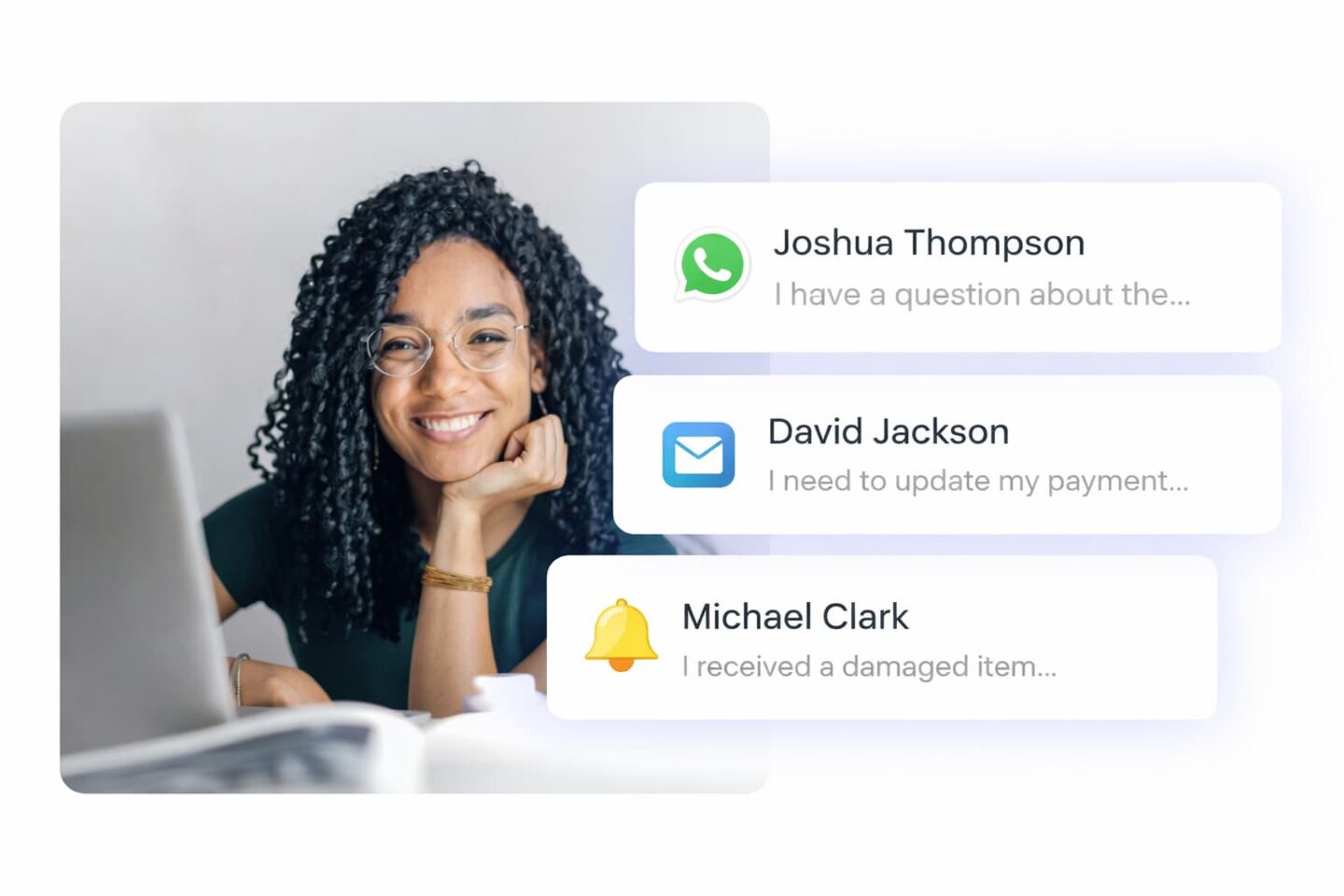
Hotel guests reach out through WhatsApp, SMS, email, live chat, OTA messages, and app notifications, and when these live in separate tools, staff waste time switching tabs and checking details. A multi-channel platform brings all messaging and automation into a single shared workspace connected to the PMS. This means staff can see the guest profile, stay dates, and conversation history instantly before responding. Native WhatsApp support: Duve, HiJiffy, Canary Technologies, and Bookboost. HotelFriend has PMS-based chat, email, and push notifications, while WhatsApp is accessible via third-party tools. The result: fewer missed messages, faster responses, and more consistent service across all channels.
Best Messaging Platform for Guest Contact
A good hotel communication platform brings guest messages, staff replies, and automation into one workspace. The table below compares how leading platforms support WhatsApp, SMS, email, live chat, push notifications, and related guest communication workflows.
Best Multi-Channel Hotel Guest Communication Platforms
|
Platform |
Best for |
WhatsApp + SMS + Email in One Place |
|
HotelFriend |
Hotels that want communication inside a PMS ecosystem |
PMS-based chat, email archive, push notifications, and automated updates. WhatsApp can be added via a third-party tool. |
|
Duve |
Hotels that need one hub for the full guest journey |
Centralizes WhatsApp, SMS, email, OTA messages, and guest journey automation. |
|
HiJiffy |
Hotels focused on AI guest messaging |
Unifies WhatsApp, email, website chat, social messengers, and AI automation. |
|
Canary Technologies |
Hotels that prioritize fast guest replies |
Combines SMS, WhatsApp, broadcasts, automation, AI support, and PMS integrations. |
|
Bookboost |
Hotels that need CRM, campaigns, and messaging |
Connects WhatsApp, email, CRM, ticketing, automation, and guest campaigns. |
(Information is taken from open sources. Valid as of July 2026)
Why Centralization Beats Tab-Switching
Front desk teams often bounce between the PMS, email, WhatsApp, and review platforms just to handle a single guest request, and each switch costs time and increases the risk of a missed message or an outdated reply. Centralizing everything into a single inbox connected to the PMS puts guest history, reservation details, and conversations in one place, so staff respond faster, hand off shifts smoothly, and deliver a consistent experience no matter who's on duty.
- ● Across platforms, fewer messages fall through the cracks
- ● Faster responses; staff don’t switch between tools
- ● The entire history of the conversation on hand makes it easy to change shifts
- ● Replies are more accurate, as they are based on reservation data
- ● A consistent guest experience across staff and channels
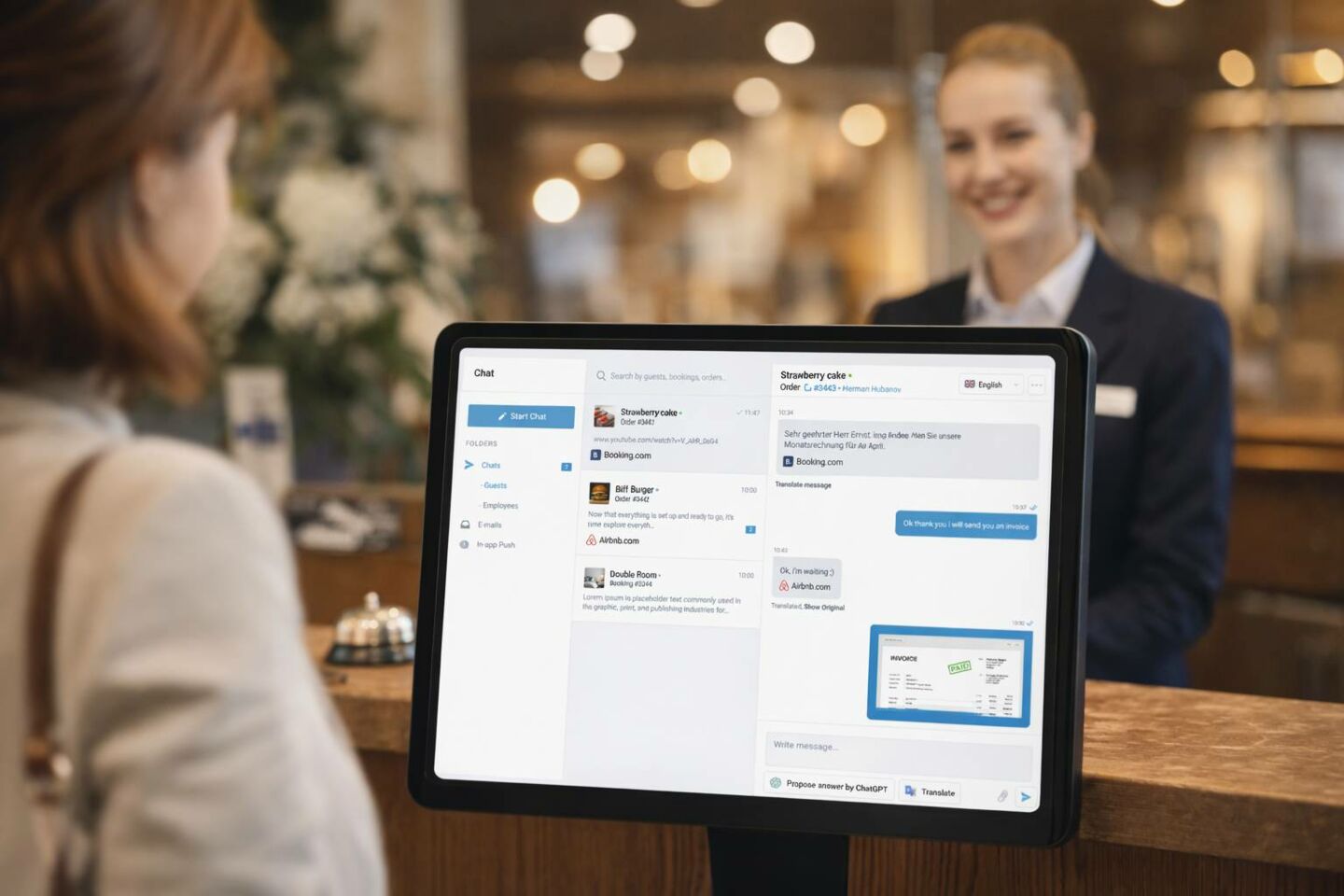
Automated Guest Messaging Across the Journey
Automated guest messaging keeps communication active before, during, and after the stay without extra front desk work: pre-arrival confirmations, payment reminders, directions, and upgrade offers; in-stay service updates and housekeeping replies; and post-checkout invoices, review requests, and return-stay offers. Linked to the PMS, this pre-arrival & post-checkout messaging helps staff respond faster, reduce missed requests, promote relevant add-ons, and keep the guest experience consistent throughout the journey.
Pre-Arrival Communication Software
Pre-arrival communication software handles logistics before the front desk staff are involved. It will send out booking confirmations, ID or payment verification, directions, parking information, upgrade offers, and a final reminder a day or two before arrival. It’s well set up to reduce repetitive calls and create a natural upsell moment for add-ons like breakfast or transfers, as guests are more open before the stay starts. It pulls the data directly from the PMS, so messages will always be accurate for each reservation, check-in date, and room type without the need for human input.
In-Stay Communication
During their stay, guests might ask about housekeeping, extra towels, late check-out, parking, restaurant hours, or maintenance problems. A centralised communication platform pulls in all these requests from WhatsApp, SMS, email, live chat, or a guest app into one place so staff can respond faster without losing context.
The platform, which integrates with the PMS, displays the guest’s room and booking details, and prior messages, before staff reply. Hotels can automate routine updates, but they prioritise urgent or personal requests, which reduces missed messages and improves service during the stay.
Post-Check-Out Follow-Ups
After a guest checks out, automated follow-up messages keep the relationship going without requiring any extra staff effort. This usually includes a thank-you message, a digital copy of the invoice or bill summary, a request for feedback or a review, and occasionally an invitation to join a loyalty program or a special offer for a future stay. Timing plays a big role, a feedback request sent within an hour or two of checkout tends to get a much better response than one sent days later, once the guest has mentally moved on from the trip. When done consistently, these follow-ups help hotels catch problems before they turn into public reviews and nudge past guests to book again.
Case Study: HZDR Guesthouse
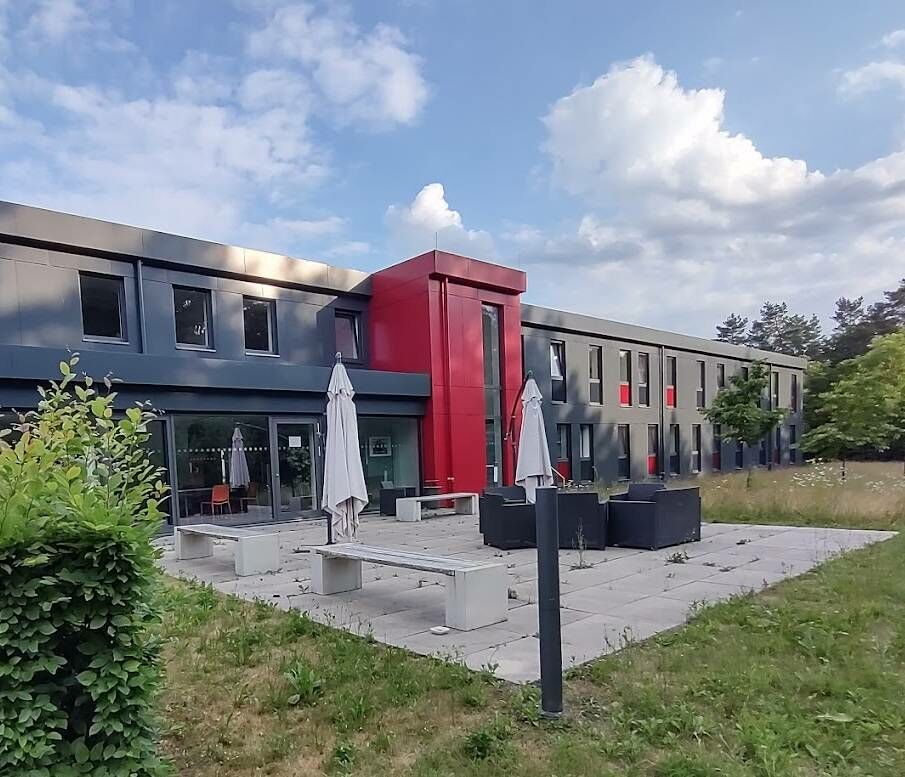
Before HotelFriend, there was no way for the 17-room HZDR Guesthouse in Rossendorf, Germany, to instantly provide guests with key information about their stay. Staff had to manually respond with confirmations, check-in times, room details, and service information, which slowed down communication and left guests waiting for basic answers.
HotelFriend enabled the team to centralise guest communication on a cloud-based PMS. Guests got more timely, valuable information about their stay, and staff had a more efficient way to manage and share information without repeated manual follow-ups. The rollout also included transparent internal communication and training, enabling the team to explain the new process to guests from day one.
87% smoother booking experience with the HotelFriend system, as guest info is no longer tied to staff availability. The HZDR Guesthouse case study shows how faster and centralised communication with guests can reduce waiting times, increase clarity, and enable GDPR-compliant data processing.
Cost of Auto-Messaging for 50-Room Hotel
Auto-messaging costs for a 50-room hotel depend on the platform, message volume, channels used, and PMS integration needs, especially when covering automated messages pre/during/post stay. The table below breaks down the main cost items for WhatsApp, SMS, email, setup, and monthly platform use.
Estimated Auto-Messaging Costs for a 50-Room Hotel
|
Cost item |
What it covers |
Estimated cost for a 50-room hotel |
Notes |
|
Platform subscription |
Shared inbox, automation, templates, staff access, basic reporting |
€100–€500+/month |
Depends on the provider, the depth of PMS integration, AI features, and the number of users. |
|
WhatsApp Business messages |
Booking updates, pre-arrival info, in-stay replies, post-stay messages |
Usage-based |
Pricing depends on the guest’s country and message category, such as marketing, utility, authentication, or service. |
|
SMS messages |
Fallback messages, urgent updates, check-in reminders |
Around $0.0769–$0.112 per outbound SMS segment |
SMS costs in the DACH region vary by country and message volume. |
|
Email messages |
Confirmations, invoices, review requests, newsletters |
Low cost or included |
Often included in the platform, but larger campaigns may require a separate email provider. |
|
PMS integration / setup |
Connecting PMS data, message triggers, templates, staff workflows |
One-time or quote-based |
Standard integrations may be included, while custom setup can cost extra. |
|
Estimated monthly budget |
Platform + WhatsApp/SMS/email usage |
€150–€500+ per month |
A realistic range for a 50-room hotel using automated pre-arrival, in-stay, and post-stay messages. |
(Information is taken from open sources. Valid as of July 2026)
Communication Tools for Small Hotels
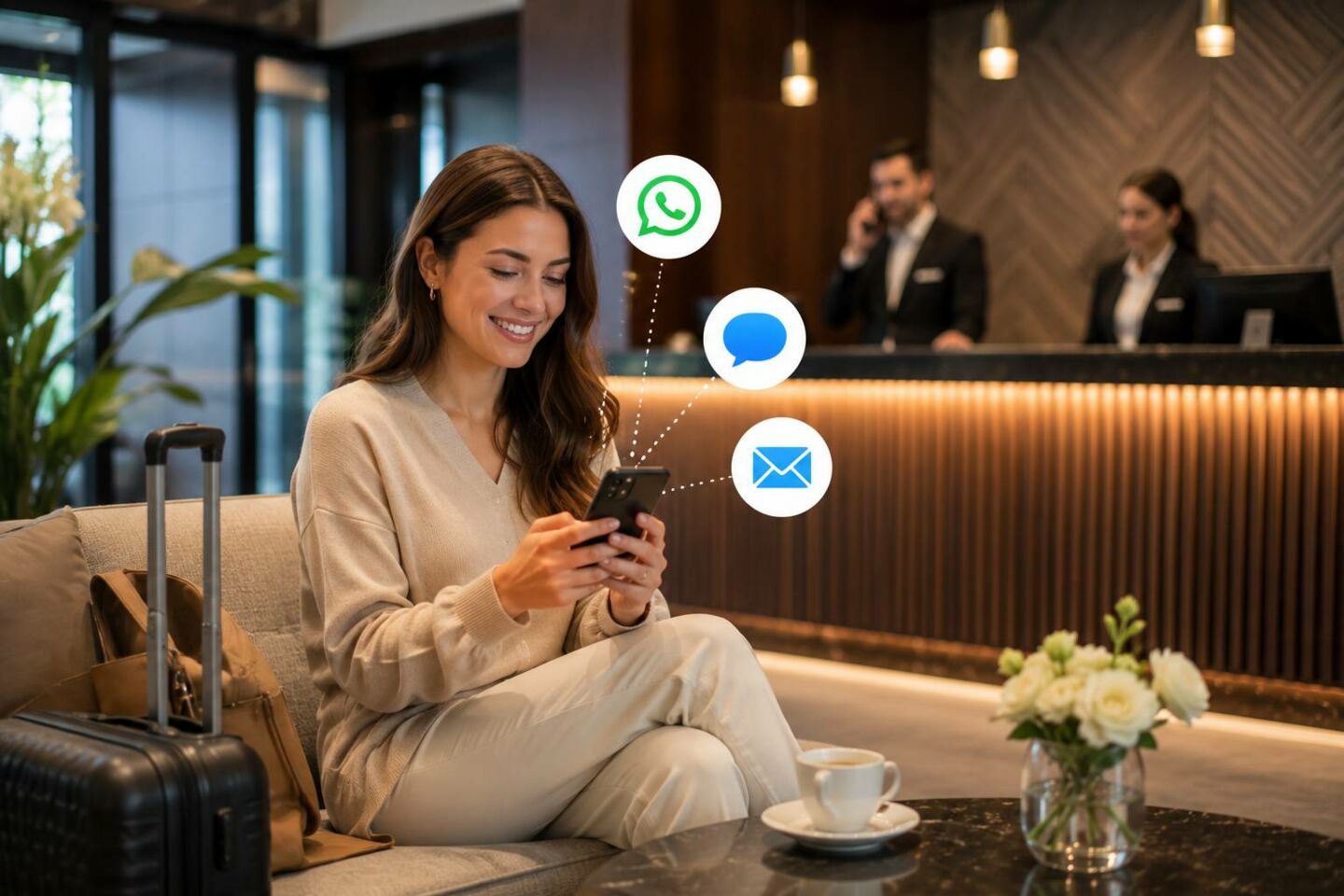
Guest communication for small operations doesn't require enterprise-scale messaging infrastructure, just something reliable, easy for a lean team to manage, and connected to daily operations. Platforms such as HotelFriend CORE, Little Hotelier, Akia, Canary Technologies, and Bookboost provide different approaches, from PMS-integrated chat to AI automation to full-lifecycle marketing.
Budget properties can start with the free WhatsApp Business app or basic tools in the $20-$80/month range, and add features like AI chatbots as they grow. Whichever option you choose, the result is the same: fewer missed messages and a better guest experience - without overwhelming your staff.
Cost of Auto-Messaging for a 50-room Hotel
Small hotels need communication tools that are easy to manage, quick to train staff to use, and integrated into daily workflows. The table below compares platforms that help properties with fewer than 50 rooms manage guest messages, automation, and service requests without adding unnecessary complexity.
Best Communication Tools for Small Hotels Under 50 Rooms
|
Platform |
Best for under 50 rooms |
Communication strengths |
Small-hotel fit |
Starting price/pricing model |
|
HotelFriend CORE |
Hotels that want communication inside a PMS ecosystem |
PMS chat, email archive, push notifications, Live Chat, and automated updates. |
One core system for daily operations. |
€30/month for HotelFriend CORE. |
|
Little Hotelier |
Small properties that need simple guest engagement |
Guest messages, check-in forms, digital directories, upsells, and reviews. |
Built specifically for small properties. |
From $1/day + 1% total booking value for Little Hotelier Basics. |
|
Akia |
Hotels that want AI-assisted messaging |
PMS-connected messages, automation, and scheduled guest journey updates. |
Automates routine guest replies. |
From €77/month per property via Apaleo Store. |
|
Canary Technologies |
Hotels that prioritize fast guest responses |
SMS, WhatsApp, broadcasts, automation, AI, and PMS integrations. |
Strong for quick front desk communication. |
Custom pricing based on products, property size, and setup. |
|
Bookboost |
Hotels that need CRM, campaigns, and messaging |
Email, SMS, WhatsApp, guest journeys, triggers, and personalization. |
Strong lifecycle messaging. |
Minimum €399/month; modules are priced per room/month. |
(Information is taken from open sources. Valid as of July 2026)
Budget Options
Most small, independent hotels don’t require the full power of an enterprise messaging system. We’ve got simple, budget-friendly tools that do the essentials well, without a hefty subscription.
- ● Free WhatsApp Business app: It includes free basic messaging, quick replies, and a business profile, but there’s no automation or support for multiple agents.
- ● Begin with the principal components: Auto-confirmation emails and a shared inbox to cover handovers. Basic PMS sync if budget permits.
- ● Extras should be optional: AI chatbots, multilingual support, and advanced analytics are great to have, but don’t spend the extra until occupancy and message volume justify it.
- ● Test before you commit: Many vendors offer free trials or scaled-down starter plans, so it’s easy to try out WhatsApp automation for a month or two before you sign up for a longer contract.
Choosing Your Platform - Buying Checklist
The right hotel communication platform is more than just a quick look at which channels each vendor offers. PMS integration, language support, and reporting depth all vary significantly and directly impact how successfully a platform can be integrated into day-to-day operations and staff workflows.
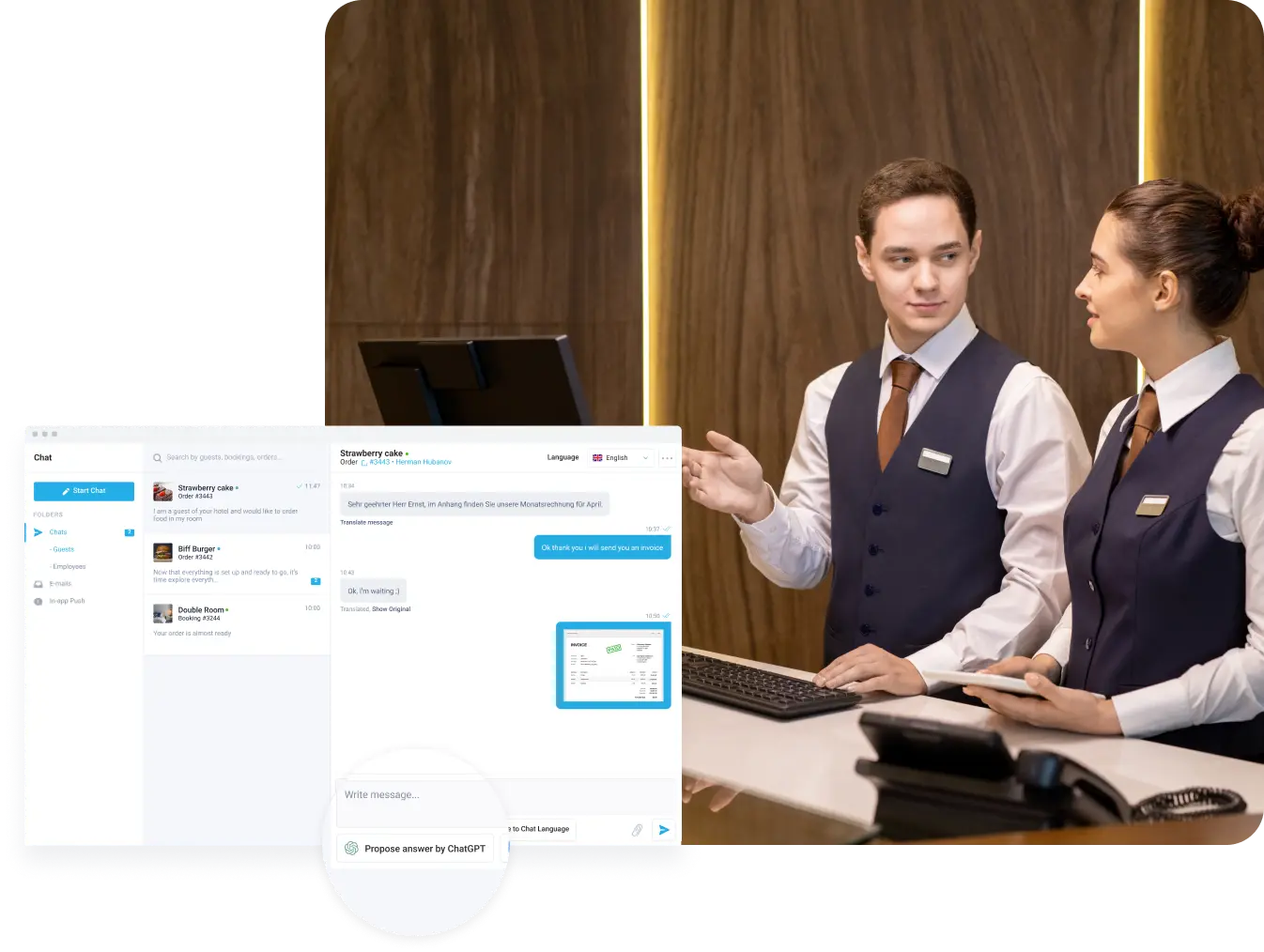
- ● PMS integration: Check whether the platform integrates with your existing PMS, channel manager, and booking engine, or operates as a standalone tool that requires manual updates.
- ● Language support: Confirm the range of languages covered for guest-facing messages and AI replies, as this can vary from a handful to over 100 depending on the vendor.
- ● Reporting depth: Look beyond basic message counts to assess whether the platform provides actionable operational insights into guest activity, automation performance, and channel usage.
- ● Best fit for your property: Match the platform's strengths, whether that's PMS-centered operations, guest journey automation, AI messaging, or CRM and campaigns, to what your hotel actually needs day to day.
Reviewing vendors against these criteria makes it easier to choose a platform that fits real operational needs rather than one with the longest feature list.
Vendor Comparison Checklist
Choosing a hotel communication platform is not only about supported channels. Hotels should also compare PMS integration, language support, reporting, and how well each vendor fits daily operations, staff workflows, and guest communication needs.
Hotel Guest Communication Platform Vendor Checklist
|
Vendor |
PMS integration |
Language support |
Reporting |
Best fit |
|
HotelFriend |
PMS, Channel Manager, Booking Engine, communication, payments, and reports in one system. |
Supports multiple languages for guest-facing communication |
Operations, reservations, occupancy, housekeeping, accounting, and guest activity. |
Hotels that want PMS and communication in one platform. |
|
Duve |
Connects PMS data, reservations, guest details, and journey workflows. |
Guest app and messages in 18+ languages. |
Guest journey, upsells, and communication performance. |
Hotels focused on guest journey automation. |
|
HiJiffy |
Uses PMS data for automated guest messages and campaigns. |
Multilingual AI responses |
Automation, conversations, campaigns, and channel activity. |
Hotels focused on AI messaging and WhatsApp. |
|
Canary Technologies |
Connects PMS with messaging, service requests, and digital workflows. |
Multilingual AI messaging with automatic translation |
Messaging, automation, broadcasts, upsells, and service requests. |
Hotels that need SMS, WhatsApp, check-in, and upsells. |
|
Bookboost |
Connects messaging with CRM and hotel system data. |
Available in English, Swedish, and Dutch |
CRM, campaigns, automation, journeys, and audiences. |
Hotels that need CRM and guest campaigns. |
(Information is taken from open sources. Valid as of July 2026)